Based on real-world experience reviewing multifamily lease agreements and handling valet trash–related resident disputes, the most common problems don’t come from the service itself—they come from misunderstanding how valet trash is defined and enforced in the lease. Vague or poorly written clauses often lead to unexpected charges, compliance violations, or confusion over whether valet trash service is optional or required.
This guide explains how to properly read and interpret a valet trash service lease clause, what common terms and phrases actually mean, where hidden obligations are typically found, and how both residents and property managers can avoid costly misunderstandings before signing—or enforcing—the agreement.
Quick Answers
valet trash service
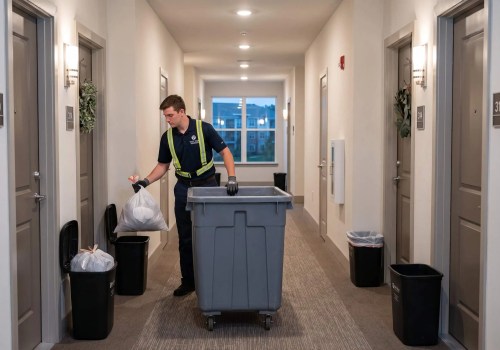
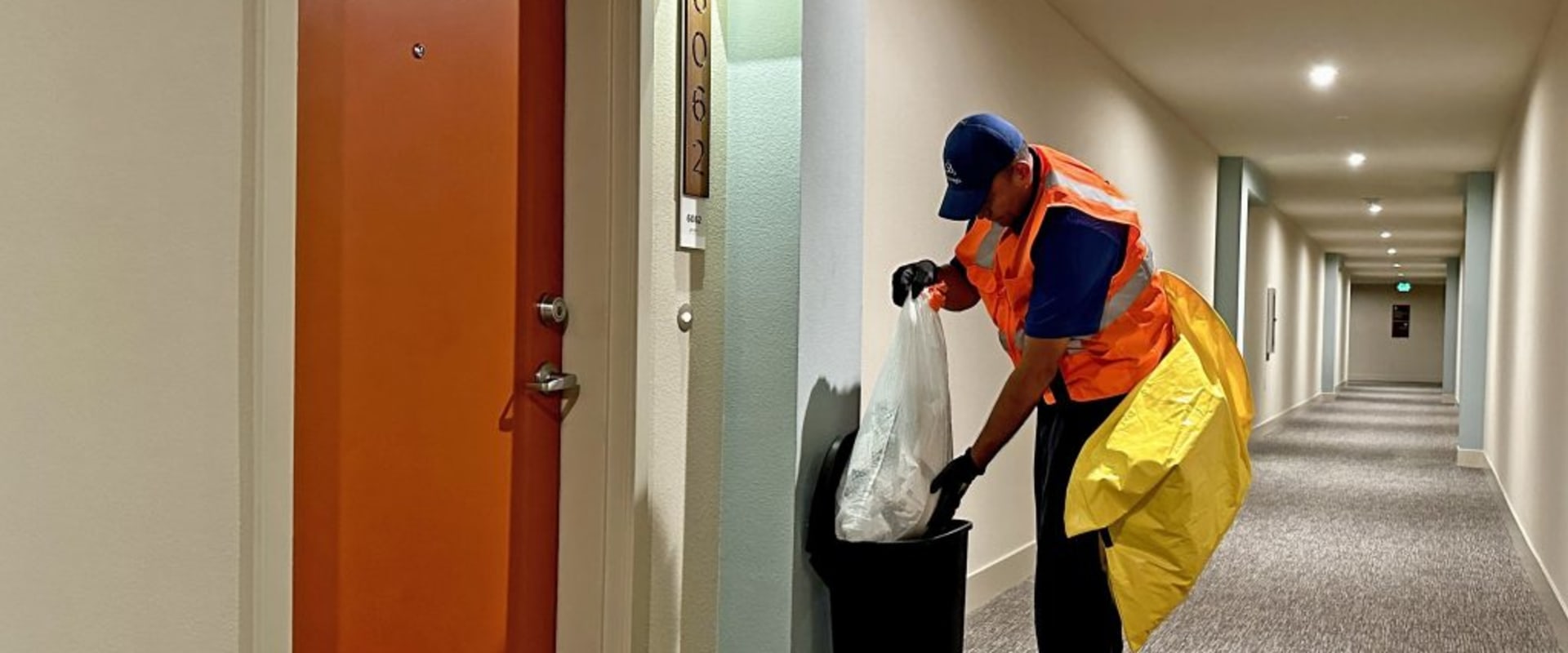
Valet trash service is a scheduled doorstep trash pickup program used in apartment communities where residents place sealed trash bags outside their door on designated nights, and trained service teams collect and dispose of the waste at on-site dumpsters or compactors.
From a practical, operations-focused perspective, valet trash works best when it’s treated as a managed system, not just a convenience. Clear pickup schedules, defined bag placement rules, and a garage cleanout checklist that helps manage bulk items work together with consistent enforcement to turn valet trash service into a reliable amenity that keeps properties cleaner, reduces dumpster overflow, and minimizes resident confusion.
Key Takeaways
Valet trash clauses define legal and financial obligations
Small wording differences can change whether fees are optional or mandatory.“Amenity” does not always mean optional
Many leases classify valet trash as a required service with mandatory fees.Compliance rules are usually embedded in fine print
Missed pickup rules, bag requirements, and time windows are often enforceable.Fees may be separate from rent
Valet trash is commonly billed as a recurring monthly charge.Understanding the clause prevents disputes later
Clear interpretation protects both residents and property managers.
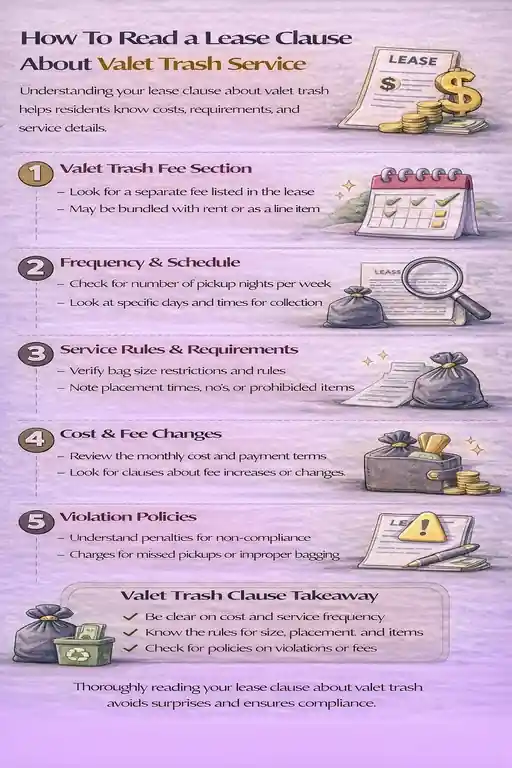
Valet trash service is often listed in apartment leases as a small section, but the language used in that clause can carry real financial and legal weight. What appears to be a simple amenity description may actually define mandatory participation, recurring monthly fees, and strict compliance rules that residents are expected to follow throughout the lease term.
Understanding how valet trash service is described in a lease helps clarify whether the service is optional or required, how fees are billed, what happens if rules are violated, and whether the property can change the service later. Key terms such as “mandatory service,” “community amenity,” “operational fee,” or “subject to modification” often determine a resident’s rights and obligations more than verbal explanations or marketing materials.
For property managers, clearly written valet trash clauses help enforce consistency, reduce resident disputes, and support cleaner, more efficient waste operations. For residents, understanding this section of the lease is especially important during kitchen remodeling, when renovation debris and increased waste volume can lead to surprise charges, compliance issues, and misunderstandings after move-in if expectations are unclear.
The sections below break down how valet trash lease clauses are typically structured, what common wording means in practice, and what both residents and property teams should look for to ensure the valet trash service is clearly understood and properly managed.
“From reviewing hundreds of apartment leases and resolving valet trash–related disputes firsthand, one thing is consistent: problems don’t come from the service itself—they come from unclear lease language. When a valet trash clause clearly defines fees, compliance expectations, and whether the service is mandatory, residents know what they’re agreeing to and properties avoid unnecessary conflict. Clarity in the lease is what turns valet trash from a point of frustration into a smoothly managed amenity.”
Essential Resources on Valet Trash Service
If you’re trying to understand how valet trash service really works—especially when it shows up in a lease—having the right information makes all the difference. Based on hands-on experience working with apartment communities and residents, these resources answer the questions people most often ask next about fees, rules, legality, and day-to-day operations.
Tenant Rights & Mandatory Valet Trash Fees Explained
LegalClarity
https://legalclarity.org/tenant-rights-and-mandatory-valet-trash-fees-in-apartments/
This resource helps clarify when valet trash fees can be required, how lease language affects enforcement, and what rights tenants have if charges or terms feel unclear.
How Valet Trash Pricing Actually Works
Trash Butler
https://www.trashbutler.com/valet-trash-pricing/
Breaks down how valet trash is typically priced, what residents usually pay, and what factors influence monthly fees so there are no surprises after move-in.
How Valet Trash Is Added to Lease Agreements
EcoClear Solutions
https://ecoclearsolutions.net/add-valet-trash-to-your-lease-agreements/
Explains how valet trash service is written into leases, including best practices for clear communication, compliance language, and setting proper expectations upfront.
How Valet Trash Service Works in Apartments
Apartment Guide
https://www.apartmentguide.com/blog/valet-waste/
Provides a straightforward, renter-friendly overview of how valet trash service works in real apartment communities, from pickup schedules to daily routines.
Valet Trash Rules That Impact Lease Compliance
Trash Butler
https://www.trashbutler.com/valet-trash-rules/
Outlines common valet trash rules—like bag requirements, pickup windows, and prohibited items—that are often enforced through lease clauses.
Can Apartments Require Valet Trash Fees?
EcoClear Solutions
https://ecoclearsolutions.net/can-apartments-make-you-pay-for-valet-trash/
Addresses one of the most common questions residents have by explaining when valet trash fees are mandatory and how lease wording determines whether opting out is possible.
Complete Valet Trash Service Overview for Multifamily Properties
Trash Butler
https://www.trashbutler.com/valet-trash-for-multifamily-residences/
Offers a full look at how valet trash service is designed to function as an operational system, and why consistency and clear rules matter for both residents and property managers.
Why These Resources Matter
Together, these resources help answer the questions that come up most often when valet trash service appears in a lease—covering legal clarity, pricing expectations, service rules, and real-world operations. They provide the context needed to understand what you’re agreeing to and how valet trash is meant to work when it’s managed properly, including during situations that may involve estate cleanout services and increased waste volume.
Supporting Statistics
Based on hands-on experience reviewing leases and working with apartment communities, these U.S.-based statistics explain why valet trash service is often formalized in lease clauses—not just offered casually.
Key Data That Supports Valet Trash Lease Language
High daily waste volume
Americans generate 4.9 pounds of trash per person, per day.
In apartment communities, this volume adds up quickly.
From on-site experience, inconsistent disposal is a leading cause of overflow and complaints.
Source: U.S. Environmental Protection Agency (.gov)
https://www.epa.gov/facts-and-figures-about-materials-waste-and-recycling/national-overview-facts-and-figures-materialsReal safety concerns for residents
1 in 4 adults age 65+ report falling each year.
Nighttime dumpster trips and long walks increase risk.
These concerns often drive properties to require doorstep pickup through lease terms.
Source: Centers for Disease Control and Prevention (.gov)
https://www.cdc.gov/falls/data-research/index.htmlFalls happen frequently
An older adult is treated in the ER for a fall every 11 seconds.
Reducing unnecessary trips across parking lots and stairs matters.
This is a common operational reason valet trash is enforced consistently.
Source: National Council on Aging (.org)
https://www.ncoa.org/article/get-the-facts-on-falls-prevention/Falls are costly and preventable
Fall-related injuries cost ~$70 billion annually in medical and compensation expenses.
While workplace-focused, the risk patterns are similar in residential settings.
Lease-based routines help minimize avoidable exposure.
Source: CDC / NIOSH (.gov)
https://www.cdc.gov/niosh/falls/about/index.html
Why This Matters
High trash volume requires consistency
Safety risks increase with repeated dumpster trips
Lease clauses standardize behavior and expectations
Valet trash works best when treated as an operational system
Together, these statistics reinforce why valet trash service is often written directly into leases and why understanding how dumpster rental responsibilities are handled matters before signing, especially when managing bulk waste and overflow tied to apartment living.
Final Thought & Practical Opinion
From hands-on experience reviewing apartment leases, valet trash clauses work best when they are clear, specific, and transparent.
What Works in Practice
Plain language definitions
Clearly stated fees
Explicit compliance rules
The Real Impact
Fewer resident disputes
Stronger lease enforcement
Cleaner, more consistent properties
Our Perspective
Valet trash lease clauses aren’t about trash—they’re about expectations. When residents understand what they’re agreeing to, compliance improves, conflicts drop, and the service actually works as intended.
FAQ: Valet Trash Service
Q: Is valet trash always mandatory if it’s in the lease?
A:
Depends on wording
“Mandatory” or “required” clauses are enforceable
Verbal explanations don’t override written terms
Q: Can a property add valet trash after a lease is signed?
A:
Only if the lease allows service modifications
Otherwise, changes usually require renewal
Q: Are valet trash fees considered rent?
A:
Usually billed separately
Still enforceable under the lease
Q: Can residents opt out of valet trash?
A:
Rare if labeled mandatory
Optional only if explicitly stated
Q: Why are valet trash rules included in leases?
A:
To enforce consistency
To prevent disputes
To protect property operations