Quick Answers
Carpet Removal
Carpet removal is the controlled process of lifting carpet, padding, and fasteners without damaging the floor underneath. From real job experience, the key is sequence over force—cut and roll the carpet, remove padding separately, loosen glue when present, and plan disposal early to reduce dust, protect floors, and support recycling.
Top Takeaways
Carpet removal works best with a clear process, not brute force.
Planning disposal ahead of time saves effort and mess.
Controlled removal protects floors and indoor air quality.
Softening adhesive makes glued carpet far easier to remove.
How the carpet is removed impacts everything that comes next.
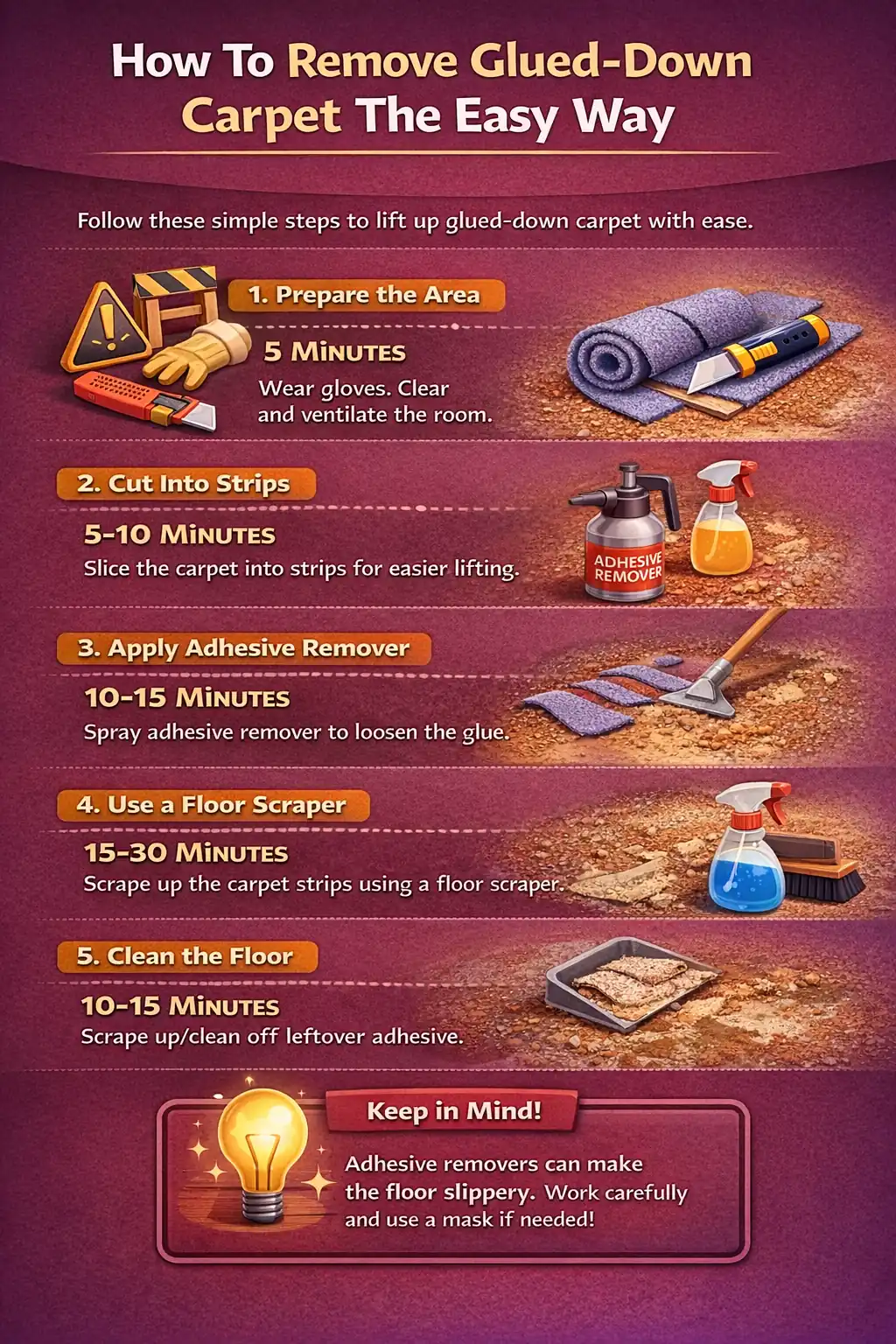
How To Remove Glued-Down Carpet The Easy Way
Glued-down carpet is hardest when you try to remove it all at once. The easiest approach is to work in small sections, weaken the adhesive, and let the glue release gradually instead of fighting it, while planning cleanup and mattress disposal at the same time to avoid multiple bulky waste trips.
Step 1: Cut the Carpet Into Manageable Strips
Cut the carpet into narrow sections using a sharp utility knife. Smaller strips reduce resistance and make the adhesive easier to break without tearing the floor.
Step 2: Lift the Carpet, Not the Glue
Start at an edge and pull the carpet back slowly. Focus on separating the carpet from the glue layer rather than scraping the glue off the floor at this stage.
Step 3: Soften the Adhesive as You Go
Use heat, moisture, or an adhesive remover to loosen stubborn glue. Softened adhesive releases faster and reduces strain on both the floor and your body.
Step 4: Scrape Residual Glue Carefully
Once the carpet is removed, address leftover adhesive with a floor scraper. Work at a low angle to avoid gouging concrete or damaging wood.
Step 5: Clean and Prep the Surface
Finish by cleaning residue and dust. A smooth, clean surface makes future flooring installation faster and prevents bonding issues later.
“Glued carpet is only difficult when you try to fight the adhesive. From our experience, the easiest removals happen when you weaken the glue in sections and let it release on its own instead of forcing the carpet up.”
Essential Resources on Carpet Removal
Thinking about removing carpet on your own or simply want to understand what’s involved? These trusted guides and tools reflect the kind of information we rely on at Jiffy Junk to help customers plan ahead, avoid surprises, and make confident decisions.
Know the Right Way to Remove Carpet
This Old House — How to Remove Carpet
A clear, step-by-step guide that explains proper preparation, tools, and removal techniques to protect the floor underneath.
https://www.thisoldhouse.com/flooring/how-to-remove-carpet
See What Carpet Removal Really Costs
Homewyse — Carpet Removal Cost Calculator
Enter your ZIP code and room details to get realistic labor and disposal cost estimates before you start or request quotes.
https://www.homewyse.com/services/cost_to_remove_carpet.html
Understand the Environmental Side of Carpet Removal
U.S. Environmental Protection Agency — Greener Carpet
The EPA explains how carpet contributes to landfill waste and outlines more responsible disposal and recycling options.
https://www.epa.gov/greenerproducts/identifying-greener-carpet
Protect Indoor Air While You Work
U.S. Environmental Protection Agency — Indoor Air Quality
Removing carpet and padding can release dust and particles. This resource explains why ventilation and controlled removal matter.
https://www.epa.gov/report-environment/indoor-air-quality
Find Carpet Recycling Programs Near You
Carpet America Recovery Effort (CARE)
CARE connects homeowners with carpet recycling facilities across the U.S., helping divert usable materials from landfills.
https://carpetrecovery.org/
Compare Your Carpet Disposal Options
Carpet Reviewed — Proper Carpet Disposal
Breaks down legal disposal methods, recycling opportunities, and donation options so you can choose the best path forward.
https://carpetreviewed.com/where-throw-away-carpet-proper-carpet-disposal-recycling/
Remove Carpet Safely With Practical Tips
Flooring Clarity — Carpet Removal Tips
Offers practical safety and technique tips to reduce floor damage, dust, and cleanup time—especially helpful for DIY projects.
https://www.flooringclarity.com/how-to-remove-carpet/
These resources help homeowners approach carpet removal with the same planning, cost awareness, and attention to environmental and indoor air quality details required in kitchen remodeling, ensuring the project is done cleanly, efficiently, and without unexpected issues.
Supporting Statistics
Real-world carpet removal experience lines up closely with the data below. These numbers explain why planning, ventilation, and controlled removal matter.
Carpet adds up fast in landfills
4+ billion pounds of carpet discarded each year in the U.S.
1%+ by weight of municipal solid waste
~2% by volume due to bulk
Once carpet is cut and stacked, its size becomes hard to ignore—especially without a disposal plan.
Source: U.S. EPA (.gov)
https://www.epa.gov/greenerproducts/identifying-greener-carpetCarpet removal affects indoor air quality
Americans spend ~90% of time indoors
Indoor pollutants are often 2–5× higher than outdoor levels
Older carpet, padding, and glue release dust when disturbed, making ventilation essential.
Source: U.S. EPA (.gov)
https://www.epa.gov/report-environment/indoor-air-qualityClean removal improves recycling outcomes
Tens of thousands of tons of carpet recycled annually
Some programs reach ~40% recycling rates
Carpet is far more likely to be recycled when it’s removed cleanly and kept separate.
Source: Carpet America Recovery Effort (.org)
https://carpetrecovery.org/
These statistics reinforce a simple truth: how carpet is removed directly impacts waste, air quality, and recycling success, which is why coordinating cleanup through a valet trash service helps ensure materials are handled efficiently and responsibly.
Final Thought & Opinion
Experience shows that carpet removal works best when it’s treated as a process, not a power struggle. Most issues come from rushing or skipping planning.
What causes problems:
Pulling instead of weakening glue
Ignoring dust control
Waiting until the end to plan disposal
What works best in real removals:
Slow, controlled removal
Managing dust as you go
Knowing where the carpet will go before you start
Our perspective:
Carpet removal isn’t just about getting the carpet out. It sets up the success of everything that comes next.
FAQ on Carpet Removal
Q: How long does carpet removal usually take?
A: Based on hands-on removals:
Most single rooms: 1–2 hours
Longer timelines when:
Padding is stapled or glued
Adhesive needs cleanup
Stairs are involved
Room size matters less than installation type.
Q: Can carpet be removed without damaging the floor underneath?
A: Yes, when done correctly.
Damage usually comes from rushing
Key prevention steps:
Cut carpet into sections
Remove padding separately
Lift tack strips in the correct order
This approach protects hardwood, concrete, and subfloors.
Q: Is DIY carpet removal a good idea?
A: Sometimes.
Works best for:
Small rooms
Loose or newer carpet
Higher risk when:
Carpet is glued down
Hardwood is underneath
Older padding and staples are present
We’re often called after DIY attempts cause avoidable damage.
Q: What should be done with old carpet after removal?
A: Plan disposal before starting.
Carpet becomes bulky fast once removed
Options may include:
Recycling if clean and dry
Approved disposal facilities
Without a plan, carpet often sits around longer than expected.
Q: Does carpet removal affect indoor air quality?
A: Yes, especially in older homes.
Disturbing carpet releases:
Dust
Allergens
Trapped debris
Best practices we rely on:
Slow, controlled removal
Ventilation during work
Immediate cleanup
These steps noticeably reduce airborne exposure.