This guide covers the specific furniture you should never take off the curb during or after a renovation, the warning signs even a careful inspection can miss, what the rules actually are around leaving furniture on curb space yourself, and what to do instead — whether you're tempted to grab something free or trying to get rid of an old piece the right way.
TL;DR Quick Answers
Leaving furniture on curb
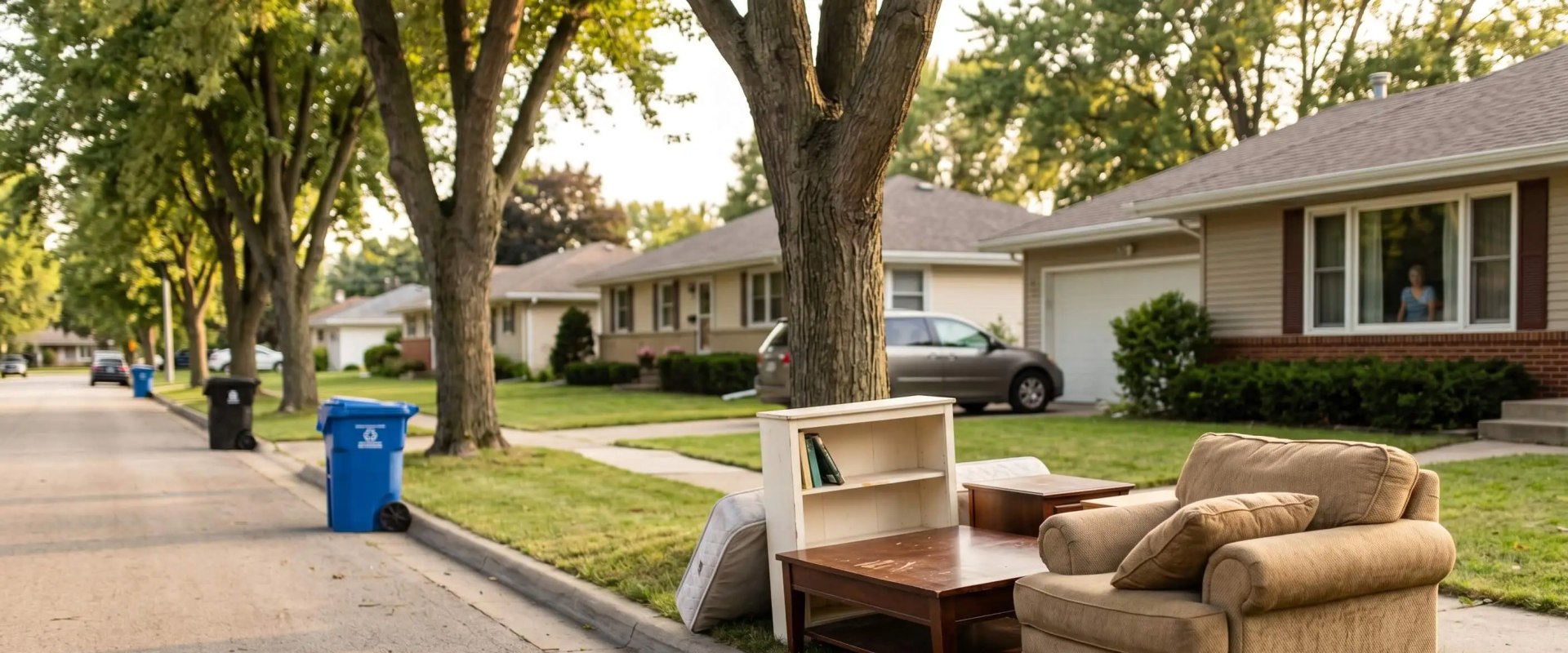
In most U.S. cities, leaving furniture on the curb is allowed only during scheduled bulk-pickup days, and several cities require labels, tags, or pre-arranged pickup. A few prohibit it outright. Before you put a piece out, check three things with your local sanitation department: the next bulk-pickup date, whether your item type (mattresses, upholstered furniture, appliances) needs a special tag, and whether weight or size limits apply.
If the piece is infested or biohazardous, federal guidance from the EPA recommends slashing the upholstery or marking it clearly so no one takes it home. The cleanest path during a renovation, when you don't have time to chase city rules, is a professional haul-away service that handles the regulations, the labeling, and the disposal in one visit.
Quick rules of thumb:
Check your city's bulk-pickup schedule before setting anything on the curb
Mattresses and upholstered furniture often need special tags or wrapping
Mark or destroy infested pieces so no one drags them into another home
Putting furniture on the curb does not transfer liability if it causes injury or hazard
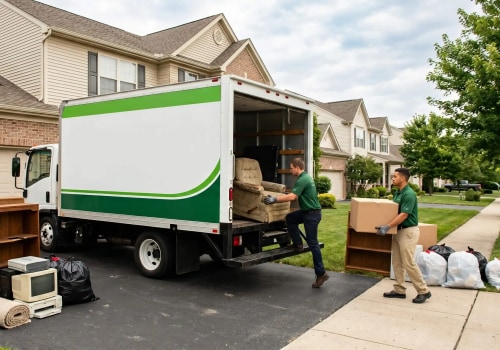
Professional haul-away is faster than navigating municipal rules during a remodel
Top Takeaways
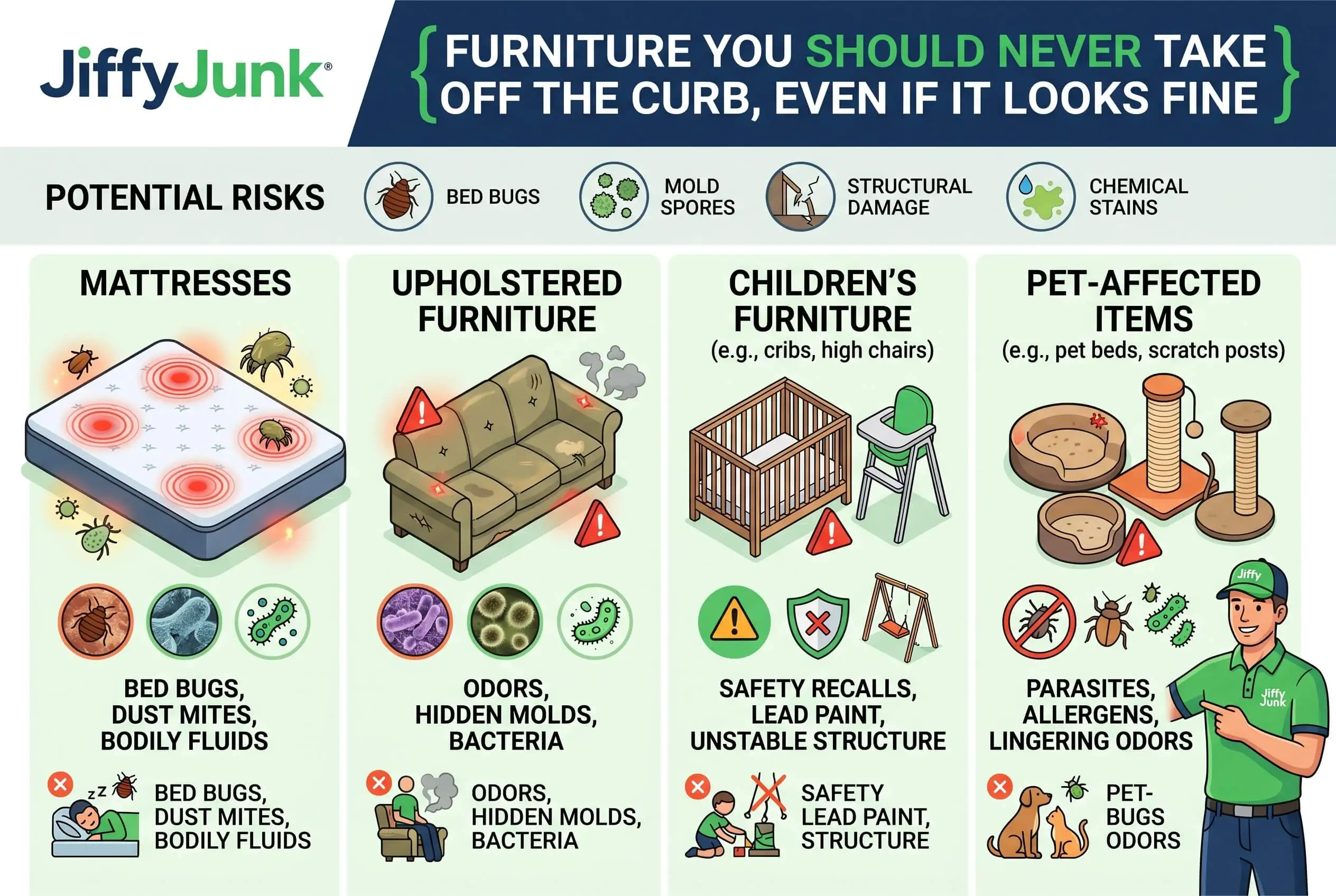
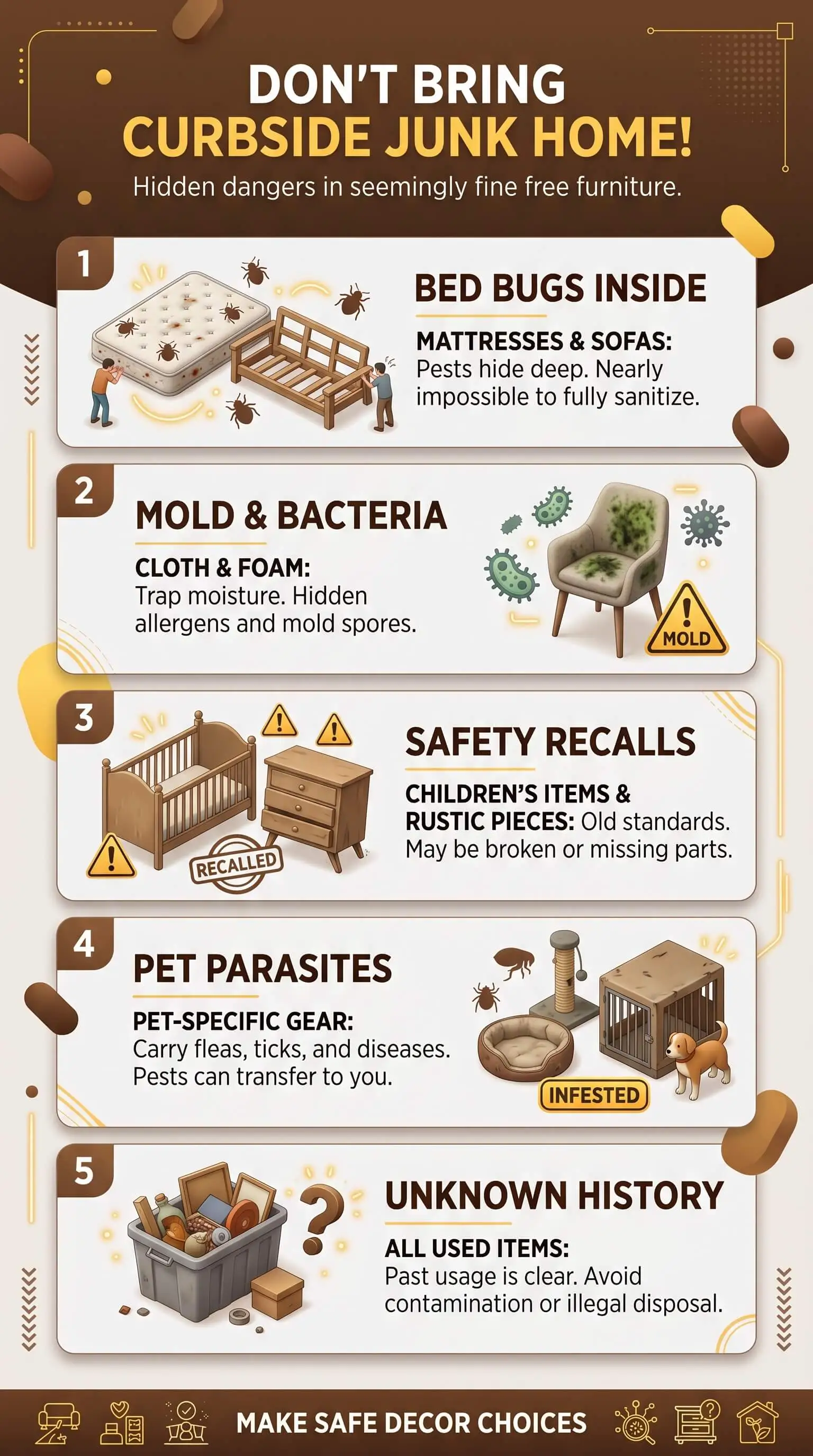
Don't take upholstered furniture, mattresses, box springs, recliners, or pet-household pieces off the curb. Bed bug and harborage risk is invisible to a sidewalk inspection.
Don't take a crib off the curb regardless of how it looks. Federal safety standards have changed, and a non-compliant crib carries a known infant fatality risk.
Skip pressboard and MDF furniture, especially older pieces and anything that's been rained on. Formaldehyde off-gassing and moisture warping are common.
Visible water damage is a near-certain sign of mold inside porous materials. Walk past.
Solid hardwood pieces with no upholstery and no water exposure are the only category I'd consider reasonable, and even then, inspect carefully.
On the disposal side, leaving furniture on curb space is regulated in most cities. A professional haul-away service is the cleanest option, especially mid-renovation.
The Hidden Cost of "Free" Curbside Furniture
The math we've watched play out across renovation projects looks like this. A free upholstered chair turns into a $1,200 bed bug treatment, a $400 mattress remediation in an adjacent room, and several weeks of bad sleep. A free pressboard dresser starts off-gassing formaldehyde into the bedroom of a child whose room you just finished remodeling. A free crib that pre-dates current safety standards puts an infant at risk of strangulation.
The curb itself isn't a neutral place either. Items left out are exposed to rain, dew, dog urine, raccoons, and whatever else passes through overnight. Even the best-looking sofa has likely sat through at least one wet cycle before you spotted it. For a quick orientation to the broader categories at play here — upholstered seating, case goods, beds, and storage — the Wikipedia entry on household furniture categories gives a useful frame for the seven types we'll cover next.
7 Pieces of Furniture You Should Never Take Off The Curb
These are the seven categories I tell every client to skip, no matter how good the piece looks under streetlight.
1. Upholstered Sofas, Loveseats, and Sectionals
Bed bugs and dust mites colonize the seams, the underside of cushions, and the inside of the frame. A visual inspection on the sidewalk simply cannot rule them out. Even when the previous owner swears the piece is clean, cushion-seam infestations are invisible to the naked eye and bed bugs can survive months without a host.
2. Mattresses and Box Springs
Reselling used mattresses without sanitization tags is regulated or outright illegal in many U.S. states. There's a reason. Biological staining, dust mite colonies, and bed bug harborage are essentially impossible to verify from outside a mattress. If one is on the curb, assume the previous owner had a reason to put it there.
3. Upholstered Chairs and Recliners
Same fabric-and-frame harborage problem as sofas, plus mechanical risk in the reclining hardware. I've watched a recliner frame fail under normal weight after sitting through one rain cycle on a curb.
4. Cribs and Children's Furniture
Federal crib safety standards have changed significantly over the past 15 years. Drop-side cribs were banned in 2011. Slat spacing, mattress fit, and corner-post requirements have all been tightened. A crib someone is putting on the curb today may have been perfectly legal when they bought it and is no longer compliant. That gap is exactly where infant deaths happen. Never take a crib off the curb.
5. Pressed-Wood Dressers, Cabinets, and Shelving
Particleboard, MDF, and laminated wood products manufactured before federal formaldehyde limits tightened can off-gas urea-formaldehyde for years. They're also extremely vulnerable to moisture. A single overnight on a damp curb can warp the structure and accelerate adhesive breakdown. If a piece has any visible water exposure, walk past.
6. Anything With Visible Water Damage or Warping
Water damage on a porous material almost always means hidden mold. Federal guidance is consistent on this. Porous materials that have been wet and grown mold often need to be discarded, because remediation cannot reliably reach mold inside the substrate. The cost of remediating a single moldy piece in your home far exceeds buying a new one at a thrift store.
7. Furniture From a Pet-Owning Household
Pet dander, urine residue, and flea eggs persist in upholstery for months after a pet is gone. You usually can't tell from the curb whether a piece came from a pet home, but if you see hair fibers in the seams or smell a faint pet odor, assume yes. For anyone in the household with allergies or asthma, that alone is reason to skip it.
"The most common post-remodel regret I hear isn't the backsplash choice or the cabinet finish. It's the free piece of furniture someone brought home because they didn't want the new space to look empty. I've gone back into homes a month after a finished kitchen remodel and found a curbside dresser already warping in summer humidity, a curbside chair that brought in bed bugs, or a curbside crib the grandparents kept for visiting grandkids that doesn't meet 2011 standards. The pattern is the same every time. The homeowner saves $200 on the front end and spends four figures undoing the damage. If a piece looks too good to be on the curb, it almost always is."
7 Essential Resources
These are the primary sources I cross-reference whenever a client asks whether a specific piece is safe to keep, take, or put out. Bookmark them. They're more reliable than any single blog post on the subject.
EPA: Protecting Your Home from Bed Bugs. Direct guidance on inspecting secondhand furniture before bringing it indoors. epa.gov/bedbugs/protecting-your-home-bed-bugs
EPA: Top Ten Tips to Prevent or Control Bed Bugs. Includes the federal guidance to slash or mark infested furniture before disposal so others don't take it. epa.gov/bedbugs/top-ten-tips-prevent-or-control-bed-bugs
EPA: Do-It-Yourself Bed Bug Control. Detailed protocol for responsibly destroying and disposing of furniture you can't safely treat. epa.gov/bedbugs/do-it-yourself-bed-bug-control
CPSC: Crib Safety Tips. Current federal guidance on what makes a crib compliant, covering slat spacing, mattress fit, hardware, and corner posts. cpsc.gov/safety-education/safety-guides/cribs/crib-safety-tips
CPSC: Used Cribs Can Be Deadly. The original consumer warning that frames why hand-me-down and curbside cribs are uniquely dangerous. cpsc.gov/Newsroom/News-Releases/1995/CPSC-Warns-Consumers-That-Used-Cribs-Can-Be-Deadly
EPA: Mold Cleanup in Your Home. Explains why porous materials like upholstery and pressboard often can't be salvaged once mold sets in. epa.gov/mold/mold-cleanup-your-home
EPA: Formaldehyde and Indoor Air Quality. Identifies pressed-wood furniture as the most significant residential source of formaldehyde emissions. epa.gov/indoor-air-quality-iaq/what-should-i-know-about-formaldehyde-and-indoor-air-quality
3 Statistics
1 in 5 Americans has had a bed bug infestation or knows someone who has. That's roughly 20% of households, which means any random sofa on a curb in any U.S. city has meaningful odds of having come from one. Source: National Pest Management Association, Bed Bug Facts & Statistics.
91% of pest professionals report finding bed bugs in single-family homes. The myth that bed bugs are a hotel or apartment problem doesn't hold up against the data. Single-family homes are the number-one environment where pest pros encounter bed bugs, ahead of apartments (89%) and hotels (68%). The curbside sofa from the nicest house on your block is not a safer bet. Source: NPMA 2018 Bugs Without Borders survey, via PestWorld.
About 50 infant deaths per year occur in cribs even after federal standards reduced the rate dramatically. CPSC data attributes the majority of these incidents to cribs that were previously owned, hand-me-down, or obtained from yard sales and used furniture sources, which is exactly the curbside scenario. Source: U.S. Consumer Product Safety Commission, CPSC Warns Consumers That Used Cribs Can Be Deadly.
Final Thoughts and Opinion
The honest position I share with every renovation client is straightforward. The only curbside pieces worth considering are solid-hardwood items with no upholstery, no kid-safety implications, and no water damage. A solid oak side table sitting out on a dry afternoon? Maybe. Anything else, walk past.
I'm not being paranoid. After years of watching homeowners lose money on curbside pickups, I've learned the math doesn't favor the curb. A new couch from a discount furniture store starts at a few hundred dollars. A Habitat ReStore sofa with documented provenance starts even lower. A bed bug treatment averages well over a thousand. Whoever picks up the curb couch isn't saving money. They're gambling, and the house tends to win.
The same logic runs in reverse on the disposal side. If you have furniture you need to get rid of, the rules around leaving furniture on the curb vary widely by city. Some require scheduled bulk pickup. Some require labeling. Some prohibit it entirely. The cleanest path during a renovation, when you have other things to think about, is a professional haul-away service that handles the rules, the lifting, and the disposal in a single visit. I'd much rather see a piece picked up by professionals than left on a curb where someone's child might drag it home.
Frequently Asked Questions
Is it illegal to take furniture from the curb?
In most U.S. cities, taking furniture from the curb isn't technically illegal once it's been set out for disposal. Municipal ordinances vary, and a few cities treat curbside items as already-claimed by the sanitation department. The bigger issue isn't legality though. It's whether the piece is safe to bring home.
How can you tell if curbside furniture has bed bugs?
You often can't. Visual signs include rust-colored fecal spots in the seams, shed skins, live bugs, or a sweet musty odor. A clean visual inspection does not rule out bed bugs. They hide in seams, joints, and frame voids that aren't visible from outside the piece. EPA guidance is to assume risk and inspect thoroughly before bringing any used soft furniture indoors.
Can you wash bed bugs out of a curbside couch?
No. Bed bugs in upholstered furniture cannot be reliably eliminated by washing, vacuuming, or surface cleaning. Effective treatment requires professional heat treatment at sustained temperatures around 118-122°F throughout the entire piece, or chemical treatment by a licensed pest professional. Either route typically costs more than buying a new sofa.
What furniture is safe to take from the curb?
Solid hardwood pieces with no upholstery, no fabric, and no signs of water damage. Think a teak side table, a solid oak chair frame with no fabric seat, or a cast-iron plant stand. These materials don't harbor bed bugs the way upholstery does, and they aren't vulnerable to mold the way porous boards are. Even then, inspect carefully and avoid anything that's been left out in the rain.
What's the rule for leaving furniture on the curb yourself?
Rules vary by municipality. Most U.S. cities require furniture to be put out only on scheduled bulk pickup days, and some require special tags, labels, or pre-arranged pickup. If the piece is infested, federal guidance recommends slashing the upholstery or marking it clearly so others don't take it. The cleanest option during a renovation is a professional removal service that handles the disposal rules for you.
Protect Your Home, Health, and Safety
If you've just finished a renovation, the worst thing you can do is reintroduce hidden risks into a freshly remodeled space. Walk past the curb. And if you're on the other side of the equation, getting rid of furniture that's done its time, skip the city-rules guesswork and skip the risk that someone's kid drags an infested piece into a new home.
For homeowners ready to clear out old furniture the right way, professional curbside furniture pickup and haul-away handles the regulations, the heavy lifting, and the disposal in a single visit. Tap here to learn how furniture haul-away works and what it costs, and protect your home, health, and safety on both sides of the curb.