After thousands of dumpster deliveries across the country, the Jiffy Junk team has identified a consistent pattern: the customers who get burned are not the ones who overspent. They are the ones who under-researched. Hidden weight fees, prohibited material surcharges, permit oversights, and mid-project swaps triggered by the wrong container size — these are the costs that turn a $600 rental into a $1,200 experience.
The best deal on a 40 yard dumpster rental comes down to four things our team has refined across thousands of jobs: knowing what drives pricing in your specific market, asking the right questions before you commit, understanding the site logistics that determine what is actually deliverable to your property, and choosing a provider whose quote reflects the real total cost — not just the number that wins the booking.
This page gives you exactly that framework — built from what we see work on real job sites every day, not from manufacturer specs or generic rental guides, so you can confidently choose the right 40 cubic yard dumpster for your project. Because the best deal is not the cheapest container. It is the right container, at a transparent price, delivered without surprises.
TL;DR Quick Answers
How to Get the Best Deal on a 40 Yard Dumpster Rental Near You
After thousands of rentals, here is the honest framework:
The best deal is not the lowest price. It is the quote that holds from booking through final pickup — with no surprises in between.
The price facts:
Average rental cost: $500 to $900 all-in
Standard weight allowance: 4 to 6 tons
Standard rental period: 7 to 14 days
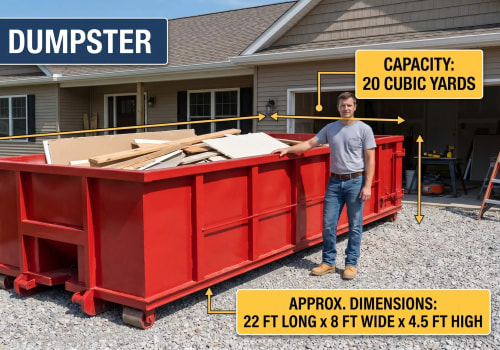
Dimensions: 22 feet long, 8 feet wide, 8 feet tall
The four questions that protect your budget before you commit:
What is the per-ton overage rate above the included weight allowance?
Are delivery, pickup, and disposal all included in the quoted price?
What fees apply if prohibited materials are found at pickup?
Is the quoted rate locked or subject to post-booking adjustments?
The three steps that reduce total cost before the container arrives:
Separate recyclable materials — concrete, wood, and metals carry lower disposal fees than mixed debris
Donate salvageable items — reduces volume, reduces tipping fees, and produces a tax benefit
Remove prohibited materials — paint, batteries, and solvents found at pickup trigger surcharges that appear nowhere in the original quote
What drives price variation by market:
Local landfill tipping fees — the single biggest pricing driver between markets
Provider competition — more providers means more transparent pricing
Seasonal demand — spring and summer compress availability and push rates up
Permit costs — $25 to $150 depending on municipality
Red flags before you book:
Provider unwilling to produce a written itemized quote
No clear answer on the per-ton overage rate
Verbal price only — no written confirmation
Delivery scheduled without a site assessment
From the Jiffy Junk team: the customers who get the best deals arrive at the booking conversation knowing more than the provider expects. They compare weight allowances — not just prices. They separate materials before loading. They get everything in writing before the truck rolls. And they never accept a verbal price as a final number.
Not sure where to start? Send us photos of your project. We will give you a straight recommendation — right container, transparent price, no surprises. Because we are not happy until you are.
Top Takeaways
The lowest quoted price and the best deal are rarely the same thing. The headline price is a starting point — not a final number. What changes it:
Weight overage fees above the included allowance
Prohibited material surcharges at pickup
Fuel adjustments added after booking
Extended rental rates no one mentioned upfront
Always get an itemized written quote before confirming. A verbal price is not a locked rate.
The real cost lever is not the provider — it is what goes in the container. Disposal fees are set before the container arrives. Three steps that most reliably reduce total cost — and that almost no customer takes:
Separate recyclable materials before loading
Donate salvageable items instead of loading them
Remove prohibited materials before delivery day
Four questions protect your budget before you commit to any provider.
What weight allowance is included — and what is the per-ton overage rate?
Are delivery, pickup, and disposal all in the quoted price?
What fees apply if prohibited materials are found at pickup?
Is the quoted rate locked or subject to fuel surcharges after booking?
A provider confident in their pricing answers all four without hesitation. One who resists is telling you something important before the container leaves their yard.
Site logistics confirmed before booking prevents delays that cost more than any fee. What to confirm before scheduling delivery:
Driveway clearance: minimum 60-foot approach
Overhead obstacles: branches, utility lines, garage overhangs
Surface stability: plywood required on asphalt and soft ground
Street permit: 1 to 2 weeks processing in most municipalities
HOA restrictions: placement duration and positioning rules
A placement failure on delivery day does not just delay the container. It delays every contractor scheduled to follow.
The provider's willingness to answer hard questions is the most reliable indicator of what the final invoice will look like. Signals that separate reliable providers from the ones whose model depends on fees customers never saw coming:
Answers all four pre-booking questions directly
Provides itemized written quotes without being asked twice
Recommends a smaller container when the scope does not justify the largest one
Quotes a price that holds from booking through final pickup
Everything in writing. Every time. Before the truck rolls.
What Actually Drives 40 Yard Dumpster Rental Pricing in Your Market
Understanding what goes into a rental quote is the first step toward identifying genuine value versus a low number designed to win the booking. In our experience, four variables drive more pricing variation than any others:
Location and local landfill tipping fees. Disposal costs vary significantly by region. A 40-yard rental in a market with high landfill tipping fees will cost more than the same container in a market with competitive disposal infrastructure — regardless of what any provider's website advertises as a national average.
Debris type. Mixed renovation debris carries higher disposal fees than clean, separated loads. Customers who separate recyclable materials — concrete, metals, clean wood — before loading consistently pay less at the landfill than customers who load everything together.
Weight allowance included in the base price. Some providers include a generous weight cap in the quoted rate. Others quote low and charge significant overage fees per ton above a minimal threshold. Always ask what weight is included — not just what the rental costs.
Rental duration. Standard rental periods run 7 to 14 days. Extensions beyond that window add daily fees that accumulate quickly on projects that run long.
What our team tells every customer before they compare quotes: a low headline price with restrictive weight limits and undisclosed fees is almost always more expensive than a transparent all-in quote that costs more upfront.
How to Compare 40 Yard Dumpster Rental Providers Without Getting Burned
Not all rental providers operate the same way — and the differences that matter most are rarely visible on a pricing page. Based on what our customers report back after working with multiple providers, here is what separates a reliable rental experience from a frustrating one:
Questions to ask every provider before booking:
What weight allowance is included in the quoted price — and what is the per-ton overage fee?
Is delivery, pickup, and disposal all included — or are any of those billed separately?
What is the policy on prohibited materials found in the container at pickup?
What happens if the project runs long and I need to extend the rental period?
Do you assess placement logistics before delivery — or does the driver make that call on arrival?
What is the cancellation and rescheduling policy if my project timeline shifts?
Red flags our team hears about most often from customers who switched providers:
Quoted prices that exclude delivery or pickup fees
Weight limits as low as 2 tons on a container rated for 4 to 6 tons of capacity
Surprise fuel surcharges added after booking
No site assessment before delivery — leading to placement failures on arrival
Prohibited material fees applied broadly to items not disclosed at booking
A provider willing to answer all six questions clearly and completely before you commit is the one most likely to deliver a transparent experience from booking through final pickup.
How Local Market Conditions Affect What You Actually Pay
The zip code where your project is located has more impact on your final rental cost than almost any other variable — and it is the one most customers never think to ask about. Here is what local market conditions actually influence:
Landfill tipping fees. These vary by county and state. Markets with limited landfill capacity or stricter environmental regulations carry higher per-ton disposal costs that providers pass directly to customers.
Permit costs and processing times. Street placement permit fees range from $25 to $150 depending on the municipality. In dense urban markets, permits can take two weeks to process. In some rural markets, no permit is required at all.
Provider competition. Markets with multiple established roll-off providers typically offer more competitive pricing and better service standards than markets dominated by one or two operators.
Seasonal demand. Spring and summer renovation seasons drive higher demand and tighter container availability in most markets. Booking two to three weeks ahead in peak season locks in better pricing and preferred delivery windows.
Our field observation: customers who call for same-day or next-day delivery during peak renovation season consistently pay more and have fewer provider options than customers who plan two to three weeks out. Advance booking is one of the most reliable ways to secure a better rate in any market.
The Hidden Fees That Turn a Good Deal Into an Expensive One
This is the section most rental guides skip — and the one our team considers most important for customers trying to evaluate true total cost. Based on what we hear from customers who have rented from multiple providers, these are the fees that appear most frequently and unexpectedly:
Weight overage fees. Charged per ton above the included weight allowance. On jobs with heavy materials like concrete, tile, or roofing shingles, overage fees can match or exceed the original rental price.
Prohibited material fees. Applied when restricted items — paint, batteries, electronics, appliances with refrigerant — are found in the container at pickup. These fees vary widely by provider and are rarely disclosed clearly at booking.
Extended rental fees. Daily charges that apply after the standard rental window. On renovation projects that run longer than expected, these accumulate quickly.
Fuel surcharges. Added by some providers after booking based on delivery distance or fuel cost fluctuations. Always ask whether the quoted price is fixed or subject to adjustment.
Permit procurement fees. Some providers charge an administrative fee to obtain street placement permits on your behalf. Others require you to obtain permits independently. Clarify this before booking.
The single most effective way to avoid all of these: ask for an all-in written quote that itemizes every potential fee before you confirm the booking. Providers confident in their pricing have no reason to resist that request.
How to Lock In the Best Rate on a 40 Yard Dumpster Rental in Your Area
Getting the best deal is not about finding the cheapest provider. It is about finding the provider whose total cost — including all fees, logistics, and service quality — delivers the most value for the scope of your project. Here is the process our team recommends:
Define your project scope before you call. Know your debris type, estimated volume, project duration, and placement location before you request a quote. Providers give more accurate pricing when they have complete project details upfront.
Request itemized quotes from at least three local providers. Compare weight allowances, overage fees, rental periods, and what is included in the base price — not just the headline number.
Ask specifically about prohibited materials relevant to your project. If your renovation involves paint, older appliances, or any potential hazardous materials, clarify disposal options and fees before loading begins.
Book two to three weeks ahead during peak season. Spring and summer rental demand compresses availability and pushes pricing up in most markets. Early booking locks in better rates and preferred delivery windows.
Confirm site logistics before finalizing the booking. Verify driveway clearance, overhead obstacles, surface stability, and permit requirements before the truck is scheduled. Placement failures on delivery day cost time and money that no rental rate makes up for.
Get the final quote in writing before confirming. A verbal price is not a locked rate. A written itemized quote is the only reliable protection against fees that appear after the container is on your property.
The best deal on a 40 yard dumpster rental in your area is the one that holds from booking through final pickup — with no surprises in between.
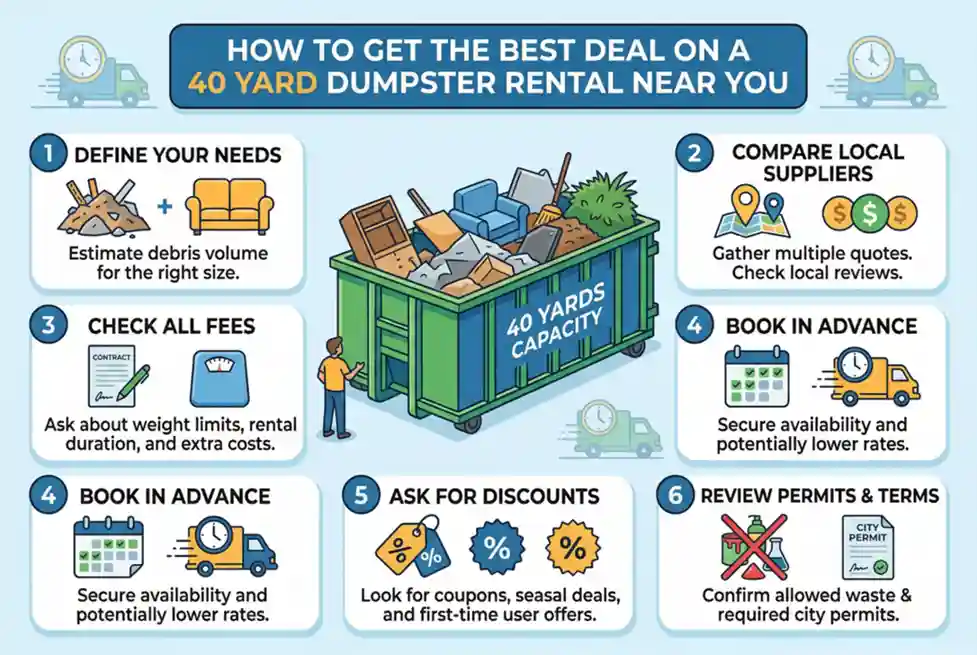
"The calls we dread most are not the ones asking for a quote — they are the ones from customers who already booked somewhere else and are calling us mid-project because something went wrong. Nine times out of ten, the story is the same: a low headline price, a weight limit nobody mentioned at booking, a hidden fee that appeared at pickup, or a container that could not be placed because nobody assessed the site beforehand. In fifteen years of hauling across the country, we have never seen a genuinely good deal that came without transparent pricing and a provider willing to answer hard questions before the truck rolled. The best rate on a 40 yard dumpster rental is not the number that wins the booking — it is the number that matches the final invoice. Those are two very different figures with two very different providers, and knowing which one you are working with before you commit is the only thing that protects your project budget from the fees that nobody told you about until it was too late."
Essential Resources
Getting the best deal on a 40 yard dumpster rental is not just about finding the lowest price — it is about walking into the booking process informed enough to protect yourself from the fees that do not appear in the headline number. These are the seven resources our team recommends before any customer commits to a rental quote.
1. Sustainable Management of Construction and Demolition Materials — U.S. EPA Know What Your Debris Is Worth Before a Provider Prices It for You
Most customers accept a rental quote without knowing that debris classification directly affects what providers charge for disposal. This EPA resource explains C&D material categories, recycling options, and diversion strategies that reduce total disposal cost — information that gives you real leverage when comparing quotes from local providers. https://www.epa.gov/smm/sustainable-management-construction-and-demolition-materials
2. Best Practices for Reducing, Reusing, and Recycling C&D Materials — U.S. EPA One Hour of Sorting Before You Load Can Meaningfully Lower Your Final Invoice
Separating recyclable materials before loading is one of the most reliable cost-reduction strategies we share with customers — and one of the most consistently skipped. This EPA guide identifies which renovation and demolition materials can be diverted from landfills, reducing the volume and weight in your container and the tipping fees that follow at the landfill. https://www.epa.gov/smm/best-practices-reducing-reusing-and-recycling-construction-and-demolition-materials
3. Household Hazardous Waste — U.S. EPA Pacific Southwest Region The Prohibited Materials Hiding in Your Garage Are the Fees No One Warned You About
On virtually every large cleanout and renovation job our team completes, we find the same restricted items — paint, batteries, solvents, and chemicals that have accumulated in storage for years. This EPA resource identifies the hazardous materials most commonly discovered during cleanouts and outlines proper disposal protocols that prevent the container rejections and surprise surcharges that show up at pickup when no one checked beforehand. https://19january2017snapshot.epa.gov/www3/region9/waste/solid/house.html
4. Construction and Demolition Debris Material-Specific Data — U.S. EPA Understand What Your Debris Weighs — Then Evaluate Every Provider's Weight Allowance Accordingly
The weight allowance included in a rental quote is only meaningful if you know what your debris type weighs per cubic yard. This EPA data resource breaks down C&D debris by material type and weight — giving you the information needed to identify whether a quoted weight limit is realistic for your specific load before overage fees appear on your invoice after pickup. https://www.epa.gov/facts-and-figures-about-materials-waste-and-recycling/construction-and-demolition-debris-material
5. How to Hire a Contractor — FTC Consumer Advice The Same Consumer Protection Framework That Protects You on Contractor Hires Applies Directly to Dumpster Rentals
The calls we hear most often from frustrated customers involve the same patterns: low headline prices, undisclosed fees, and providers who were difficult to reach after the container was dropped. This FTC resource covers how to compare quotes, identify deceptive pricing practices, verify provider legitimacy, and protect yourself from unexpected charges — the same framework every customer should apply before confirming a rental booking. https://consumer.ftc.gov/articles/hiring-a-contractor
6. Lead-Safe Renovations for DIYers — U.S. EPA Know What Your Renovation Waste Can Go Into a Standard Container Before Loading Begins
Older home renovations are where our team most consistently encounters waste that cannot go into a standard dumpster — and where prohibited material fees hit customers hardest. This EPA guide clarifies what renovation debris qualifies for standard disposal and what requires separate handling before loading starts — essential reading for anyone renovating a pre-1978 home. https://www.epa.gov/lead/lead-safe-renovations-diyers
7. State and Local Government C&D Materials Measurement Reports — U.S. EPA Understand Why Your Local Market Prices the Way It Does — Then Use That to Your Advantage
One of the most common questions we field is why dumpster rental prices vary so significantly across markets. The answer is almost always landfill tipping fees — and they differ dramatically by state and municipality. This EPA state-level resource explains what drives disposal costs in your specific location, why quotes vary across local providers, and what to ask about tipping fees before accepting any rental price as a final number. https://www.epa.gov/smm/state-and-local-government-construction-and-demolition-materials-measurement-reports
These essential resources act as a practical dumpster rental checklist—helping you compare pricing, identify hidden fees, understand material restrictions, and make informed decisions before committing to a 40 yard dumpster rental.
Supporting Statistics
Every customer who calls us frustrated about a dumpster rental describes the same moment: the final invoice did not match the number they agreed to. Here is what the data confirms about why that happens — and what our team has learned across thousands of jobs about how to prevent it.
Recycling C&D Materials Instead of Landfilling Them Can Cut Disposal Costs by a Factor of Two, Three, or Four
Most customers treat the rental price as the primary cost variable. Our team treats debris separation as the primary cost variable — because it directly determines what the final invoice says.
According to EPA regional guidance, landfilling C&D waste costs over $80 per ton in many locations — exceeding $100 per ton in some markets — with transportation adding another $30 to $40 per ton. For almost every recyclable material in the C&D waste stream, recycling is substantially less expensive than disposal. For the highest volume materials, recycling costs less by a factor of two, three, or four. US EPA
What that math looks like on an active job site:
Clean concrete, wood, and metals loaded separately carry dramatically lower disposal fees
Customers who sort before loading consistently pay less per ton than those who mix everything together
The hour spent separating recyclables before the container arrives is the highest-return cost-reduction step available — and almost no one takes it
What providers who quote low are counting on:
Customers who never separate materials
Mixed debris fees that recover margin after the booking is confirmed
Overage charges that appear on the invoice after the container leaves
Customers who separate go into the final invoice protected. Customers who do not hand that protection to their provider.
Source: U.S. Environmental Protection Agency — Recycling Construction and Demolition Wastes, EPA Region 1 https://archive.epa.gov/region1/healthcare/web/pdf/cdrecyclingguide.pdf
Recycling C&D Materials Reduces Overall Building Project Expenses — Before the Container Is Even Booked
The customers who get the best deals on large rental jobs are not the ones who found the cheapest provider. They are the ones who reduced total disposal cost before they ever called to book.
According to EPA's 2016 Recycling Economic Information Report, recycling C&D materials created 175,000 jobs in 2012. The EPA confirms that reducing C&D materials sent to landfills reduces overall building project expenses through avoided disposal costs — and that donating recovered materials to qualified 501(c)(3) charities provides an additional tax benefit. US EPA
What our crews observe consistently across large renovation and demolition hauls:
Fixtures, hardware, reusable lumber, and working appliances donated instead of loaded reduce both container volume and landfill tipping fees
On jobs where customers plan diversion before booking, total disposal cost is measurably lower than on comparable jobs where everything goes in mixed
The tax benefit from donating to a qualified charity adds a financial return no rental quote can match
The perspective most rental guides never offer:
The best deal on a 40-yarder is not negotiated with the provider
It is built before booking by reducing what goes in the container in the first place
Source: U.S. Environmental Protection Agency — Sustainable Management of Construction and Demolition Materials https://www.epa.gov/smm/sustainable-management-construction-and-demolition-materials
Hidden and Unexpected Fees Make True Cost Comparison Impossible Without a Written Itemized Quote
This finding explains every frustrated call we receive from a customer who booked elsewhere first. The pattern is always the same: a low number won the booking. A different number appeared on the invoice.
According to the Consumer Financial Protection Bureau, when companies charge excessive fees on top of an upfront price, it becomes difficult or impossible for consumers to comparison shop based on actual cost — a pattern the CFPB has documented across a wide range of consumer service transactions. Consumer Financial Protection Bureau
What that finding looks like in the dumpster rental industry — based on what our team hears from customers who switched providers after a bad experience:
Weight overage fees that appeared at pickup because the quoted allowance was never clearly stated
Prohibited material surcharges applied to items no one disclosed as restricted before loading
Fuel surcharges added after the quote was accepted
Extended rental fees that accumulated because the daily rate was never discussed upfront
The customers who avoid all of these share one habit: they asked for a written itemized quote before confirming.
Before any customer confirms a booking, our team recommends:
Request an itemized written quote covering every potential fee
Ask specifically about the per-ton overage rate above the included weight allowance
Confirm delivery, pickup, and disposal are all included in the quoted price
Ask what happens if prohibited materials are found at pickup — and get the answer in writing
A provider confident in their pricing answers all four questions without hesitation. The ones who resist are communicating something important about how the final invoice is going to look — before the container ever leaves their yard.
Source: Consumer Financial Protection Bureau — The Hidden Cost of Junk Fees https://www.consumerfinance.gov/about-us/blog/hidden-cost-junk-fees/
Final Thoughts
After thousands of deliveries, pickups, and job site conversations, our team has reached a conclusion that does not appear in any rental guide: the customers who consistently get the best deals are not the ones who found the lowest price. They are the ones who arrived at the booking conversation knowing more than the provider expected.
That is the insight this page is built around — and it only comes from watching the decision play out on both sides of the transaction across thousands of jobs.
The Price You See Is Never the Full Story
The headline rental price is a starting point. What it becomes depends on four variables most providers hope customers never ask about:
What weight allowance is included — and what the per-ton overage rate is above it
Whether delivery, pickup, and disposal are all in the quoted price or billed separately
What prohibited material fees look like if restricted items are found at pickup
Whether the quoted rate is locked or subject to fuel surcharges after booking
Every billing dispute we hear about traces back to one of those four questions. Questions that were never asked before the container was confirmed.
The Real Cost Lever Is Not the Provider — It Is What Goes in the Container
This is the perspective most rental guides miss entirely. The disposal fees that drive the final invoice are determined before the container arrives — by what you load and how you load it.
What our team observes consistently across large project hauls:
Customers who separate recyclable materials before loading pay less per ton at the landfill
Customers who donate salvageable items before the container arrives reduce both volume and disposal cost simultaneously
Customers who identify and remove prohibited materials before delivery eliminate the surcharge category that generates the most post-pickup disputes
The best deal on a 40 yard dumpster rental is not negotiated at booking. It is built in the hour before the container arrives — through sorting, separation, and a clear plan for what actually needs to go in.
What Thousands of Hauls Have Taught Us About Finding Genuine Value
The customers who consistently get the best outcomes share a pattern that has nothing to do with finding the lowest price:
Define the full project scope — debris type, estimated volume, and site logistics — before requesting a single quote
Request itemized written quotes from multiple providers and compare weight allowances, not just headline prices
Separate recyclable and donatable materials before the container arrives
Confirm site logistics — driveway clearance, overhead obstacles, permit requirements — before delivery is scheduled
Get every fee in writing before the booking is confirmed
None of those steps require special knowledge. They require the same preparation that protects any consumer in any service transaction.
The difference in the dumpster rental industry: the stakes compound fast on active job sites. A $200 fee dispute can idle a contractor crew that costs ten times that amount per day.
Our Honest Opinion
The dumpster rental industry has a transparency problem — and customers pay for it on invoices they never expected.
The best deal on a 40 yard dumpster rental near you is not the lowest headline price. It is the quote backed by a provider who:
Answers hard questions before the truck rolls
Quotes a price that holds through final pickup
Gives an honest container size recommendation — even when a smaller size is the right call
Treats the booking conversation as the beginning of a service relationship — not a transaction to close before the customer asks anything inconvenient
That is the standard we hold ourselves to on every job. It is the standard worth holding every provider to before you book.
Not sure where to start? Send us photos of your project and a description of what you are removing. We will give you a straight recommendation — right container, transparent price, no surprises. Because we are not happy until you are.
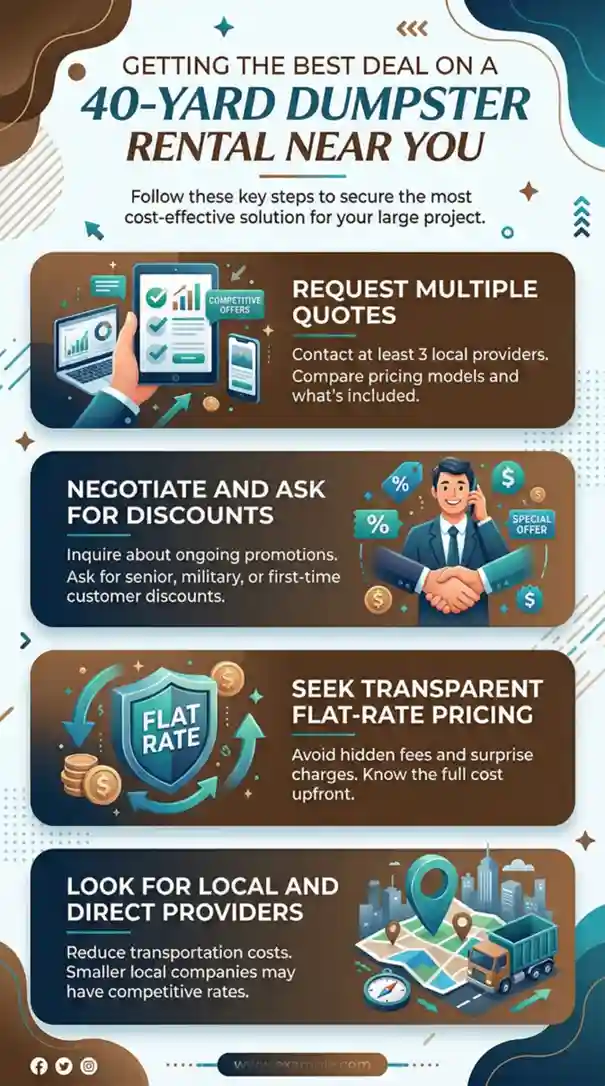
FAQ on How to Get the Best Deal on a 40 Yard Dumpster Rental Near You
Q: What is the average cost of a 40 yard dumpster rental and what should be included in the price?
A: Rental rates: $500 to $900 depending on location, debris type, duration, and local landfill tipping fees.
What a legitimate all-in quote always includes:
Delivery and pickup
4 to 6 ton weight allowance
Standard 7 to 14 day rental period
Disposal fees up to the included weight limit
What low headline prices frequently leave out:
Per-ton overage fees above the base weight allowance
Fuel surcharges added after booking
Street placement permit fees
Prohibited material surcharges applied at pickup
Extended rental fees beyond the standard window
What we hear from customers who got burned: every one of those fees appeared on the final invoice without appearing in the original conversation.
Our standing rule: a provider unwilling to produce a written itemized quote before the truck rolls is not a provider worth booking with.
Q: How do I compare 40 yard dumpster rental quotes to find the best deal in my area?
A: Comparing on headline price alone is the most reliable way to end up with the highest final invoice.
The framework our team walks every customer through:
Request itemized written quotes from at least three local providers — weight allowance, overage rate, rental period, and inclusions must all be visible before comparing anything
Compare weight allowances — not just prices. A $650 quote with a 4-ton limit costs more than a $750 quote with a 6-ton limit the moment debris exceeds 4 tons
Ask every provider these four questions before committing:
What is the per-ton overage rate above the included weight allowance?
Are delivery, pickup, and disposal all included in the quoted price?
What fees apply if prohibited materials are found at pickup?
Is the quoted rate locked or subject to post-booking adjustments?
Search the provider's name alongside "hidden fees" and "final invoice" before confirming
Get the final quote in writing before the truck is scheduled — a verbal price is not a locked rate
Q: What hidden fees should I watch out for when renting a 40 yard dumpster?
A: Based on what customers report after working with providers who did not disclose fees upfront, these are the charges that appear most often on final invoices:
Weight overage fees — the most common by far:
Applied per ton above the included allowance
On jobs with concrete, tile, or roofing shingles these can match the original rental price
Always ask for the per-ton overage rate before loading anything
Prohibited material fees — triggered at pickup:
Paint, batteries, electronics, refrigerants, and automotive fluids are what our crews find on virtually every large cleanout
Walk every storage area before loading begins
One hour of sorting prevents the most common source of post-pickup disputes
Fuel surcharges:
Added by some providers after booking without disclosure
Always ask whether the price is fixed before confirming
Extended rental fees:
Daily charges applied after the standard window
Ask for the daily extension rate before confirming the booking — not when you need more time
Permit procurement fees:
Some providers charge to obtain street permits
Others require customers to handle it independently without saying so at booking
Clarify permit responsibility before scheduling delivery
Our field observation: every one of these fees is avoidable with one conversation before the container is confirmed.
Q: How does my location affect the price of a 40 yard dumpster rental?
A: Location is the variable most providers never explain — and the one that creates the most confusion when customers compare quotes.
What local conditions actually determine:
Landfill tipping fees:
The single biggest pricing driver
Vary significantly by county and state
High-tipping-fee markets can run $150 to $200 more than competitive disposal markets
Through no fault of the provider or the customer
Provider competition:
Markets with multiple established providers consistently offer more transparent pricing
Customers in low-competition markets who accept the first quote almost always overpay
Seasonal demand:
Spring and summer compress availability and push pricing up
Customers who book 2 to 3 weeks ahead secure better rates than same-day callers
We see this pattern on every large market surge
Permit costs:
Fees range from $25 to $150 depending on municipality
Processing takes up to 2 weeks in dense urban markets
Confirm local requirements before scheduling — permit delays are some of the most preventable project setbacks we see
Q: How can I reduce the total cost of a 40 yard dumpster rental before and during the project?
A: The most reliable cost-reduction steps happen before the container arrives — not during the booking conversation.
Before the container arrives:
Separate recyclable materials. Clean concrete, wood, metals, and drywall carry lower disposal fees than mixed debris. Customers who separate pay less per ton — every time.
Donate salvageable items. Fixtures, hardware, working appliances, and reusable lumber donated to a Habitat ReStore reduce container volume and tipping fees simultaneously. Qualified donations also produce a tax benefit most customers never claim.
Remove prohibited materials. Paint, batteries, pesticides, and solvents found at pickup trigger surcharges that appear nowhere in the original quote. One hour of sorting is the highest-return preparation step available.
Confirm site logistics. Walk the placement area, check overhead clearance, verify surface stability, and confirm permit requirements before the truck is scheduled. A delivery failure wastes the delivery fee and delays everything scheduled to follow.
During the rental period:
Load strategically — break down bulky items and fill gaps with smaller debris. Strategic loading fits 15 to 20 percent more material.
Track the rental window against your project timeline. Contact your provider before the standard period closes if the project runs long.
Pull restricted items mid-project if discovered. Fees applied retroactively at the landfill are rarely small — and harder to dispute after the fact.
Customers who follow these steps consistently see final invoices that match or come in below the original quote. The ones who skip them are the ones calling us after the fact — wondering what happened to the deal they thought they had.