TL;DR Quick Answers
How do I get rid of old furniture?
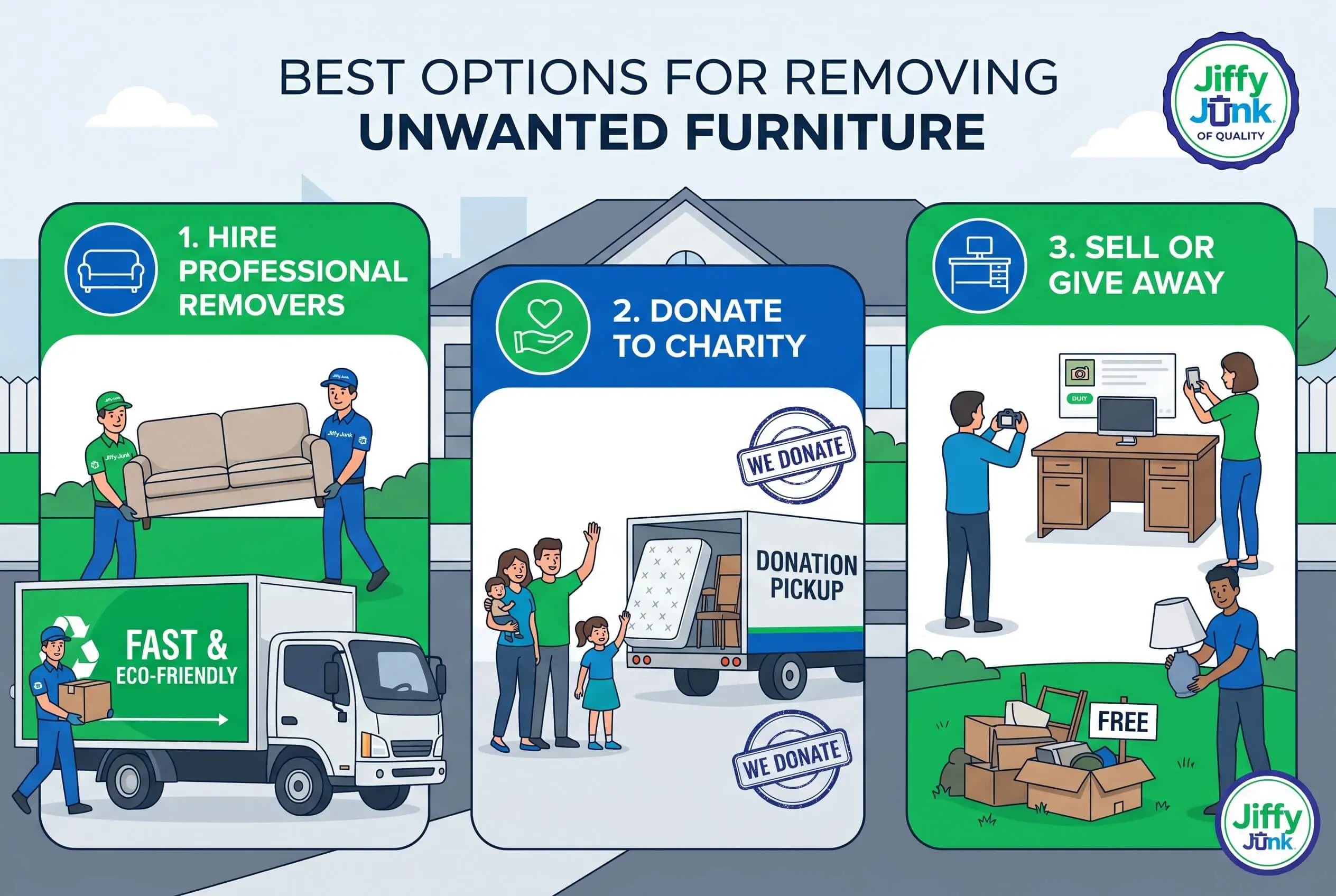
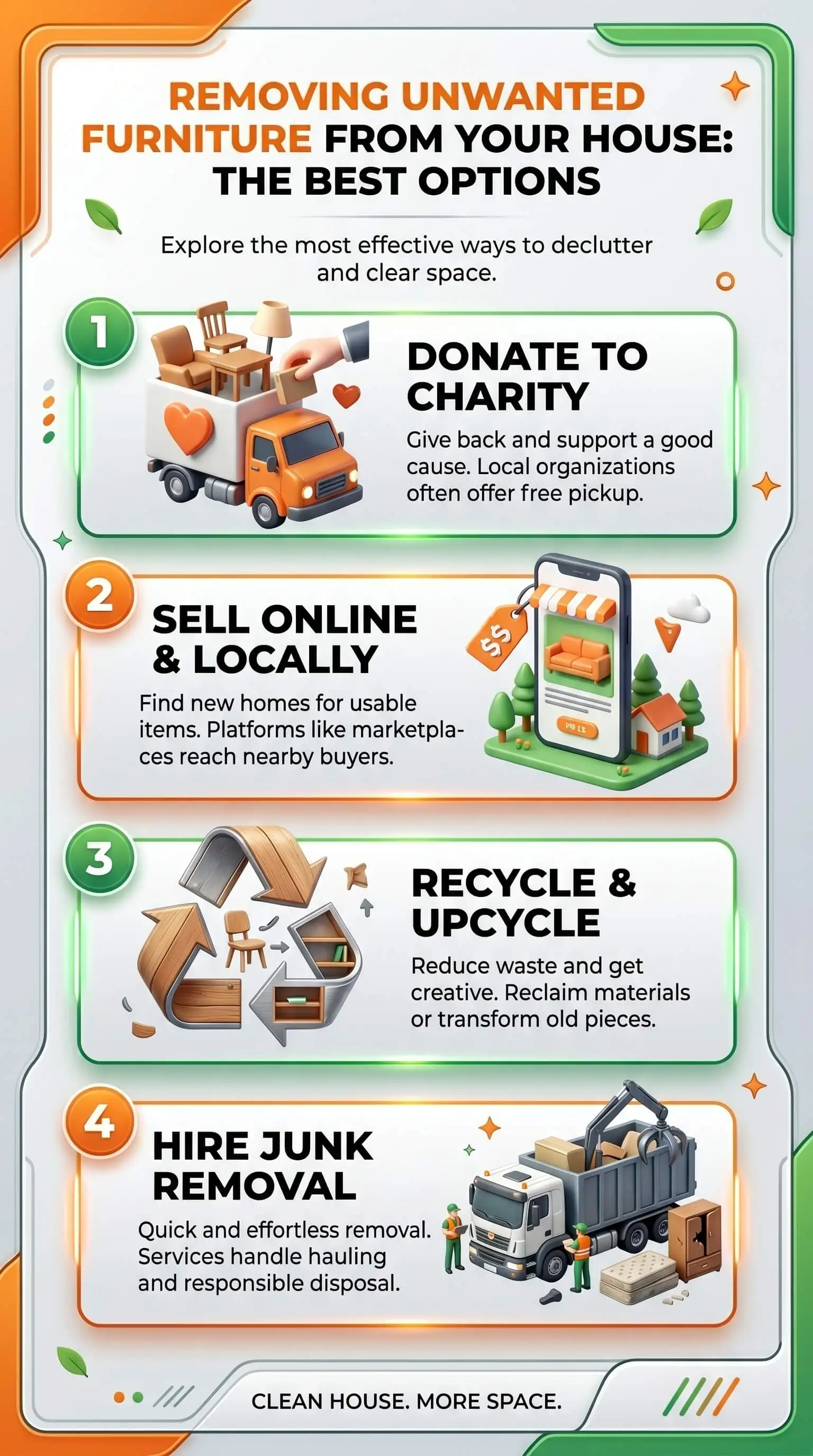
Six routes work for getting rid of old furniture: donation, resale, gifting, recycling, municipal bulk pickup, or professional junk removal. The right choice depends on condition first and timeline second.
Clean and functional, weeks to spare: Donate to Goodwill, The Salvation Army, Habitat for Humanity ReStore, or a Furniture Bank Network member. Many offer free pickup, and donations are tax-deductible at fair market value when itemized.
High-value or designer: List on Facebook Marketplace, Craigslist, AptDeco, or Chairish. Expect 15-40% recovery of original retail.
Functional, minimal effort: Gift through a Buy Nothing group or Freecycle. Items typically find a home in 24-72 hours.
Damaged but no rush: Schedule free municipal bulk pickup via 311. Wait times run one to four weeks.
Damaged or urgent: Hire a junk removal service. Typical pricing runs $75-$150 for a single piece and $500-$900 for a full truckload.
From an indoor-air perspective, aged upholstery and old foam hold years of accumulated dust mites, pet dander, and trace VOC residue. The cleaner-air payoff is real, and it usually arrives within days of removal.
Top Takeaways
Six real options exist for removing unwanted furniture: donation, resale, gifting, recycling/upcycling, municipal bulk pickup, and professional junk removal.
Condition is the first decision filter. Clean and functional opens all six options. Damaged narrows the realistic shortlist to recycling, bulk pickup, or junk removal.
Donations are tax-deductible at fair market value if you itemize on Schedule A. Keep the written receipt every time.
Curbside dumping without scheduled pickup carries fines of $100 to $500 in most U.S. cities. Schedule first, place at the curb second.
Professional junk removal typically runs $75 to $150 for a single piece and $500 to $900 for a full truckload, with reputable services diverting most materials from landfills.
Old furniture is an air-quality issue as much as a space issue. Removal often produces a noticeable difference in how a room feels.
The Six Best Options for Removing Unwanted Furniture
Triage takes about 10 seconds. Is the piece clean, structurally sound, and free of stains, tears, pet damage, and odors? If yes, all six options below are open to you. If not, the realistic shortlist is recycling, bulk pickup, or professional removal.
1. Donate to a Charity or Nonprofit
Goodwill, The Salvation Army, Habitat for Humanity ReStore, and Furniture Bank Network members accept gently used furniture, and many offer free in-home pickup. If you itemize on your federal return, donations are tax-deductible at fair market value. Keep the receipt and check IRS Publication 561 for valuation guidance. This route works for clean, fully functional pieces, especially solid wood, mid-century, and good-condition upholstery without stains. During peak donation seasons (spring moves, post-holidays), schedule two to four weeks ahead.
2. Sell Online or Locally
Facebook Marketplace, Craigslist, OfferUp, and Nextdoor handle the bulk of secondhand resale. AptDeco and Chairish suit higher-end and designer pieces. Expect to recover 15–40% of original retail for typical furniture and upward of 50% for in-demand brands. Selling pays, but it costs hours: photos, listing copy, message threads, and the occasional no-show. Use this route when you have a few weeks of runway and a piece worth the work.
3. Give It Away
Buy Nothing Project groups, Freecycle, the Craigslist free section, and curb alerts on Nextdoor move fast. Usable items often find a new home in 24 to 72 hours. Pick this route when you want the piece gone with minimal effort and don’t need cash for it. One caveat is real. Most cities prohibit indefinite curbside placement, and fines for unauthorized dumping run $100 to $500. Verify your municipality’s rules before putting anything at the curb.
4. Recycle, Upcycle, or Repurpose
Wood furniture goes to wood recyclers, and metal frames go to scrap yards. Mattresses are recyclable through the Mattress Recycling Council’s Bye Bye Mattress program in California, Connecticut, Oregon, and Rhode Island, with growing programs in select municipalities elsewhere. For DIYers, refinishing a dresser, reupholstering a chair, or repurposing a headboard into a bench keeps quality pieces out of the waste stream. Materials typically run $20 to $300, depending on scope.
5. Use Municipal Bulk Pickup
Most U.S. cities run free bulk pickup as part of property-tax-funded sanitation, typically allowing 2 to 12 large items per household per year. Schedule through your city’s 311 line or sanitation department website. Limitations vary widely. Many programs exclude mattresses, upholstered items, or pieces over a weight threshold. Wait times often run one to four weeks, so this option works when you’re not in a hurry.
6. Hire a Professional Junk Removal Service
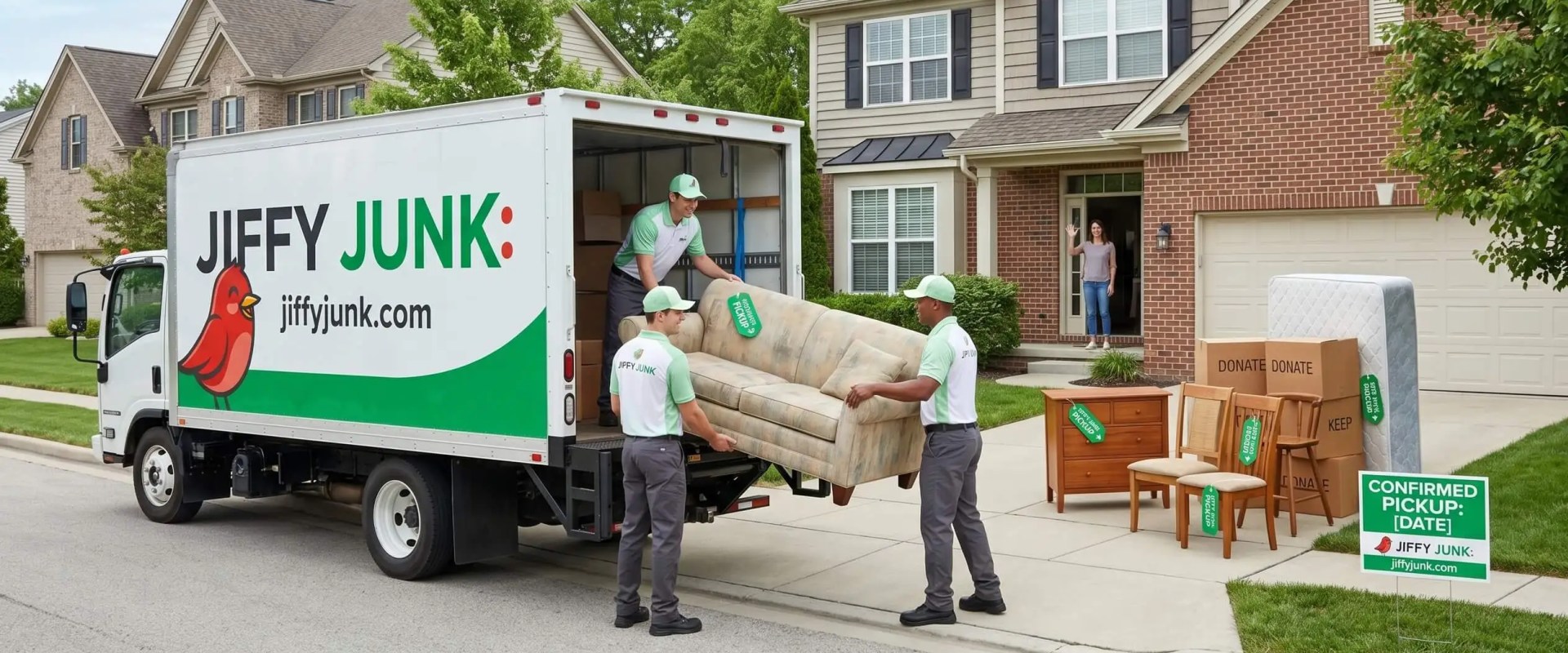
For heavy items, multi-room cleanouts, top-floor walkups, estate clearances, or pieces no charity will accept, a professional crew handles the full lift. Booking-to-pickup is often inside 24 to 48 hours. Typical pricing runs $75 to $150 for a single piece, $250 to $600 for a half-truckload, and $500 to $900 for a full truckload. Reputable services divert 60 to 80% or more of materials from landfills via donation and recycling partnerships. Jiffy Junk’s guide to getting rid of and disposing of old furniture covers donation, recycling, and removal step by step, with a near-me section on couch disposal.
Choosing the Right Path
When you’re getting rid of old furniture, match the route to the piece. Clean and functional plus a few weeks of patience means donation or resale. Functional but pressed for time, give it away. Damaged but no urgency, schedule bulk pickup. Damaged and you need it gone today, junk removal earns its fee.
“People underestimate how much of an indoor-air-quality issue old furniture becomes until it’s gone. A 15-year-old upholstered chair that has lived through three pets, two basement floods, and a few allergy seasons doesn’t carry the same microbial profile as a new one.
From the reader feedback we receive at this site, removing aged upholstered furniture changes how a room feels within days: less ambient dust, fewer allergens, and one less reservoir for whatever has been settling into the cushions over a decade. The article you’re reading covers logistics, but the bigger payoff is the air your family breathes afterward. If disposal options have been the obstacle, the air-quality side of the trade-off usually beats one Saturday morning donation pickup.”
7 Essential Resources
Every URL below has been checked live. Bookmark whichever path matches your situation.
1. Goodwill Donation Center Locator
https://www.goodwill.org/locator/
Find a Goodwill drop-off near you. Each store sets its own furniture acceptance criteria, so call ahead before loading the truck.
2. The Salvation Army Donation Pickup (SATRUCK)
Schedule a free in-home furniture pickup in most metro areas. Enter your ZIP to confirm availability.
3. Habitat for Humanity ReStore Donation Page
https://www.habitat.org/restores/donate-goods
Find a ReStore near you and arrange a furniture donation pickup. ReStores accept new and gently used furniture, appliances, and household goods.
4. Furniture Bank Network Directory
https://furniturebanks.org/furniture-bank-directory/
The North American directory of independent furniture banks that route donated furniture to families recovering from homelessness, domestic violence, or natural disasters.
5. Bye Bye Mattress (Mattress Recycling Council) Facility Finder
https://byebyemattress.com/find-a-facility/
Free mattress drop-off and curbside pickup options in California, Connecticut, Oregon, Rhode Island, and select municipalities elsewhere.
6. The Buy Nothing Project
https://buynothingproject.org/
Join your local Buy Nothing community on Facebook or in the Buy Nothing app and gift furniture to a neighbor.
7. IRS Publication 561 — Determining the Value of Donated Property
https://www.irs.gov/forms-pubs/about-publication-561
The IRS’s official guidance for valuing furniture and other household donations on your federal tax return.
3 Statistics
Each figure below is sourced from a primary publication. Citations follow.
1. Americans landfill 80% of their old furniture.
Americans generated 12.1 million tons of furniture and furnishings waste in 2018, about 4.1% of all municipal solid waste. 80.1% went to landfills. Most of the rest was combusted for energy, with virtually nothing recycled.
Source: U.S. Environmental Protection Agency, Durable Goods Product-Specific Data
2. Mattresses are one of the largest single-item disposal challenges in the U.S.
The Mattress Recycling Council estimates that U.S. consumers discard at least 20 million mattresses and box springs each year, each occupying up to 40 cubic feet of landfill space. The materials inside (steel, foam, fiber, wood) are largely recyclable when collected through programs like Bye Bye Mattress.
Source: Bye Bye Mattress, a program of the Mattress Recycling Council
3. Hyperlocal gifting networks have become a serious furniture-disposal channel.
The Buy Nothing Project moves about 162,000 metric tons of items each year through its gifting network, with a community-shared value of roughly $360 million. Membership crosses 14 million people in 50+ countries, making it one of the largest free-goods platforms anywhere.
Source: The Buy Nothing Project, About page
Final Thoughts and Opinion
“How do I get rid of this old couch?” rarely has the same answer twice. A clean dresser in good shape belongs with a charity or a Buy Nothing neighbor. A stained sleeper sofa with a bedbug history belongs in a junk removal truck. Condition is the variable that matters most. An honest assessment before scheduling saves time on both ends: charities turn items away at the curb if the photos don’t match, and that’s a wasted trip for them and a wasted morning for you.
Our position is straightforward. When in doubt, donate first and remove last. Donation extends the useful life of furniture, cuts landfill volume, and produces a real tax benefit. Junk removal earns its fee when condition rules out donation, when timing is urgent, or when the volume calls for professional handling. Whichever route you pick, the cleaner-air bonus is real. Old furniture leaves with the dust, dander, and microbial residue it has been holding for years. Getting rid of old furniture is an indoor-air-quality decision as much as a logistics one.
Frequently Asked Questions
What is the cheapest way to get rid of old furniture?
The free routes are the cheapest. Donate to a charity that picks up, give the piece away through a Buy Nothing group or Freecycle, or schedule municipal bulk pickup via 311. Each works for furniture in usable shape.
Will Goodwill or Salvation Army pick up old furniture for free?
Both organizations offer free in-home pickup in many metro areas, but availability and acceptance criteria vary by location. Use the official online schedulers (goodwill.org/locator and satruck.org) or call ahead. Items must be clean, structurally sound, and free of major stains, tears, pet damage, and odors.
Is it illegal to leave furniture on the curb?
In most U.S. cities, yes. Leaving furniture at the curb without a scheduled bulk pickup violates municipal sanitation ordinances, and cities often issue fines from $100 to $500. Always schedule pickup through your sanitation department before placing items at the curb.
How much does a junk removal service cost for a single couch?
A single couch typically costs $75 to $150 to remove, with prices higher in major metro areas and on top-floor walkups. Pricing depends on volume, weight, and how far the crew has to carry the piece from inside the home.
Can I deduct furniture donations from my taxes?
Yes. Donations to qualifying 501(c)(3) charities are deductible at fair market value if you itemize on Schedule A. Use IRS Publication 561 for valuation guidance, request a written receipt at the time of donation, and file IRS Form 8283 if your total noncash contributions exceed $500.
How do I dispose of an old mattress responsibly?
If you live in California, Connecticut, Oregon, or Rhode Island, the Bye Bye Mattress facility finder lists free drop-off and curbside options. Elsewhere, ask the retailer about take-back when you buy a new mattress (most are required to offer it), or book a junk removal pickup. Most thrift stores will not accept used mattresses for hygiene reasons.
Ready to Reclaim Your Space — and Your Indoor Air?
Clearing square footage is one piece of getting rid of old furniture. The bigger benefit is fewer years of accumulated dust, dander, and allergens hiding in upholstery and old foam. The seven verified resources above cover every disposal path, from free charity pickup to same-day professional removal. Tap any resource to start the process that fits your home, your timeline, and your budget. The path you actually use today is the one that works.