Clutter hides in the same predictable places in almost every home. Clear those before pickup day and a two-trip job becomes one clean sweep. Here's the junk removal locations walk-through we run before the truck shows up.
TL;DR Quick Answers
Junk Removal Locations
The junk removal locations homeowners forget most are the hidden storage spots a crew can't see from the front door. Walk these before pickup day so nothing gets left behind:
Attic and ceiling crawl space
Garage rafters and the backyard shed
Basement corners and the dead space under the stairs
Closet top shelves and under the beds
Home office electronics: old laptops, cables, and printers
Outdoor furniture, plus any off-site storage unit or packed car trunk
One slow loop through these helps your junk removal cost calculator work better by catching everything up front, so you can estimate the load accurately and usually avoid a second trip.
Top Takeaways
Most forgotten junk sits in the attic, the shed, the garage rafters, and vehicles.
Run your sweep by zone: inside the house, outside and detached spaces, then the last-mile spots like trunks and the curb.
Set aside donations, electronics, and any household waste that needs special handling before pickup.
A five-minute walk-through usually saves you a costly return trip.
The Junk Removal Locations Almost Everyone Forgets
Junk doesn't pile up in one tidy spot. It scatters into corners you stopped checking years ago. Here's where it hides, grouped by how easy each one is to miss.
Inside the house
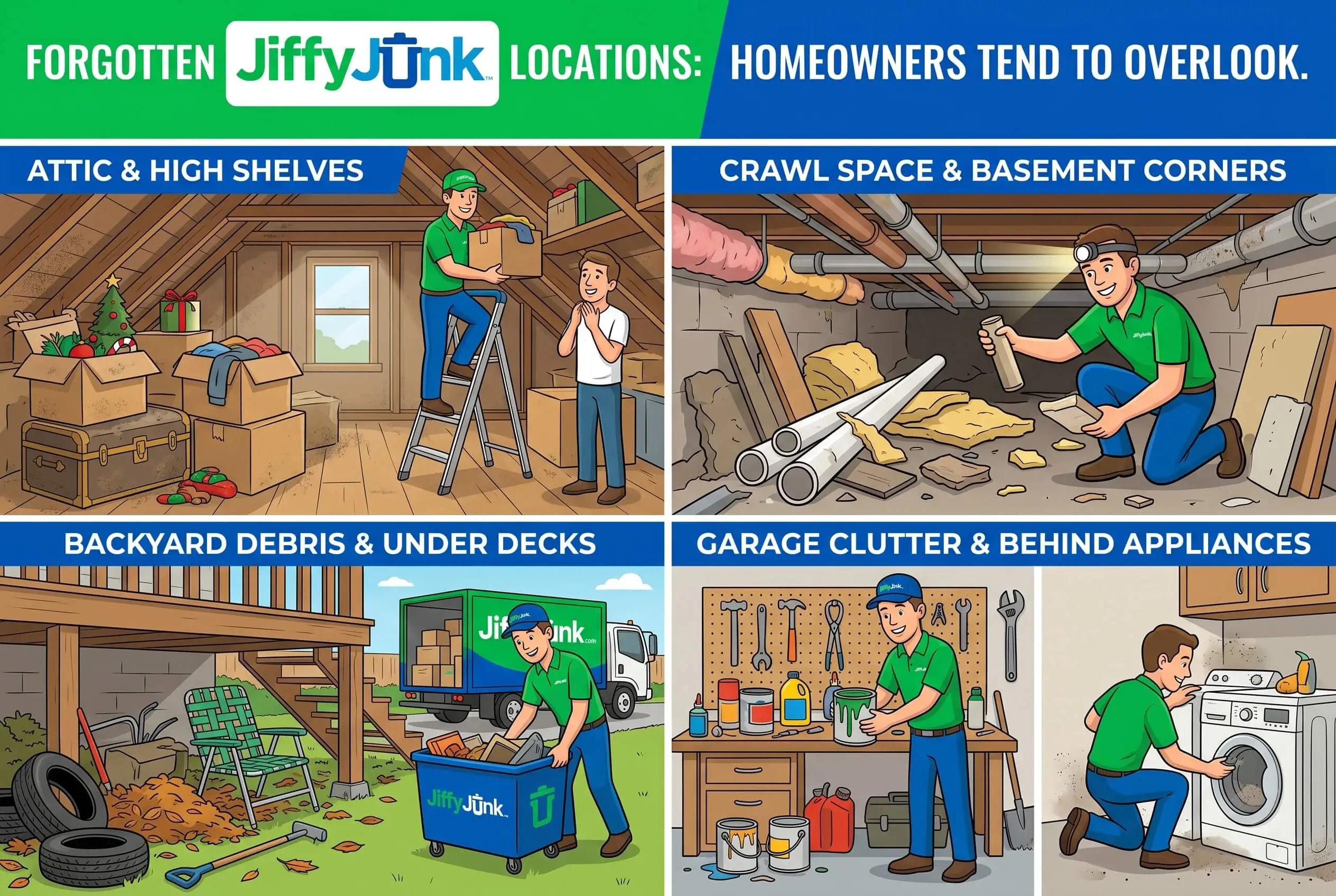
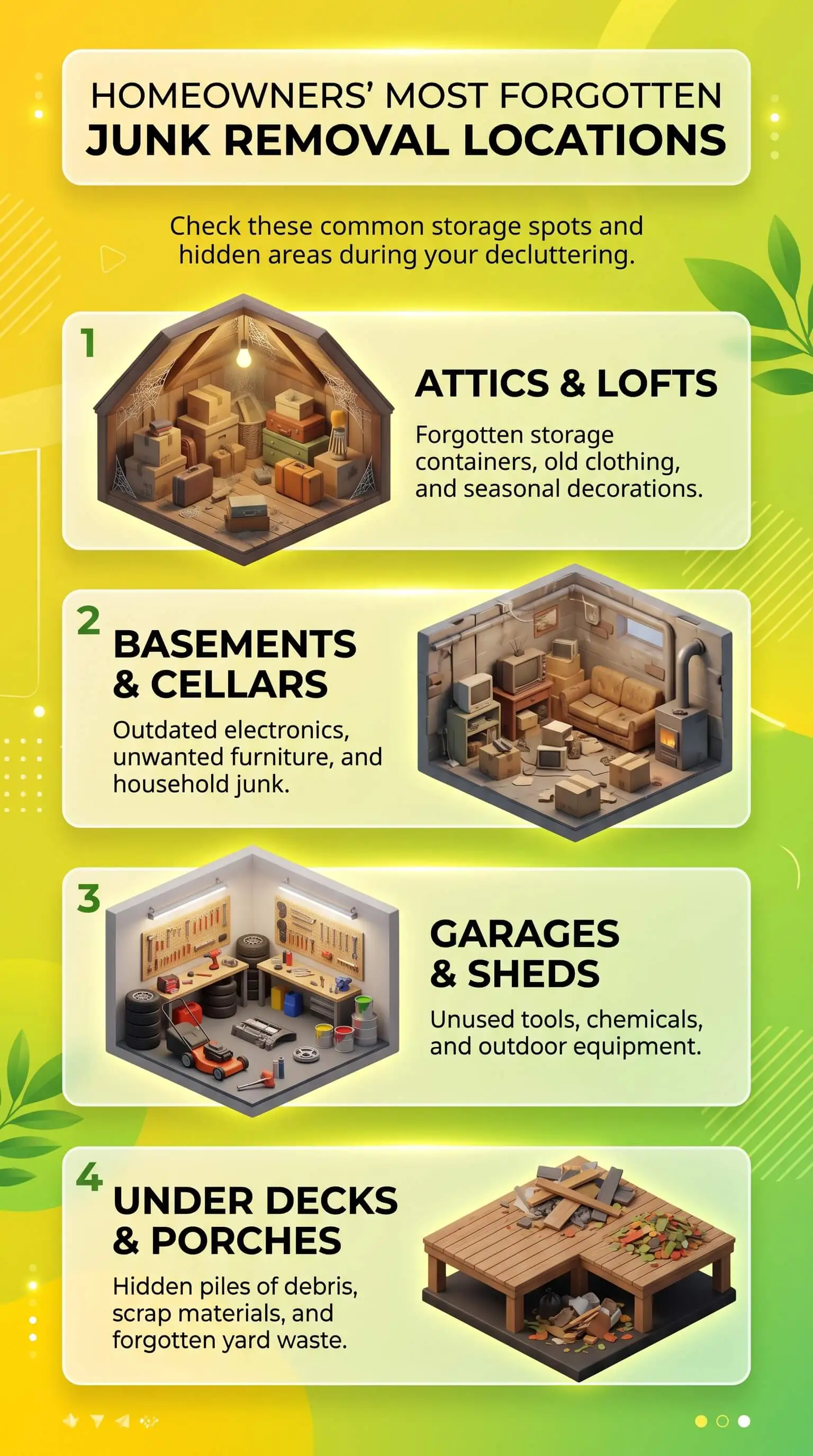
The attic and the ceiling crawl space. Out of sight, and usually packed with boxes nobody has opened since the last move.
Under the beds and on closet top shelves. Soft storage swallows shoes, bins, and broken gear.
Basement back corners and the dead space under the stairs. That's where paint cans, old electronics, and someday projects end up.
Behind and under the big appliances during a kitchen remodel. Old units, hoses, and packaging slide back there and stay put.
The home office. Dead laptops, tangled cables, and a printer or two count as e-waste, and they need separate handling.
Outside and detached spaces
The shed and the garage rafters. Overhead racks hold the heaviest forgotten stuff, from lumber scraps to a broken weed trimmer.
The side yard and the strip behind the house. Pallets, planters, and bagged debris collect where you rarely walk.
The patio, deck, and balcony. Sun-faded furniture and a rusted grill are easy to skip because they already live outside.
The off-site storage unit. If you're paying every month to store junk, pickup day is when to deal with it.
The last-mile spots
Car trunks and truck beds. People load junk meaning to drop it later, then forget it's back there.
The curb or driveway. Clear a path so the crew can move fast and stay safe.
A tenant's or a relative's separate space. Check what belongs to whom before anything moves.
In the cleanouts we've walked, the shed is the spot people swear is empty. It never is. One slow loop with this list catches the items that send a crew back for a second visit.
“After years of running pickups, I'll tell you the attic, the shed, and the family car are the spots people forget most. We load a full truck, and then someone remembers the boxes above the garage. A five-minute sweep before we get there saves a return trip, a second fee, and another day of waiting around. The folks who walk their whole property first are the ones who get a single clean pickup.”
Essential Resources
When your sweep turns up things the crew can't just run to the landfill, these point you to the right donation, recycling, or disposal option.
EPA Reducing and Reusing Basics. Plain guidance on cutting clutter and reusing what you can.
Earth911 Recycling Search. Type an item and your ZIP, and it finds the nearest drop-off.
Habitat for Humanity ReStore: Donate Goods. Donate usable furniture and appliances, with pickup in many areas.
Goodwill Donation Center Locator. Find a nearby spot for clothing, housewares, and small goods.
EPA Household Hazardous Waste. Safe handling for paint, solvents, and chemicals from the garage and shed.
EPA Electronics Donation and Recycling. Where to send old computers, phones, and TVs.
Bye Bye Mattress: Find a Facility. Locate mattress and box spring recycling near you.
Supporting Statistics
Americans threw out about 292.4 million tons of municipal solid waste in 2018, roughly 4.9 pounds per person every day, according to the EPA.
Furniture and furnishings made up about 12.1 million tons of that, up from just 2.2 million tons in 1960, per EPA durable goods data.
U.S. waste generation has climbed about 93 percent since 1980, reports the University of Michigan Center for Sustainable Systems.
Final Thoughts
A smooth same-day junk removal day comes down to one habit: walk every room and every outside zone before the truck arrives. The homeowners who treat that sweep as part of the job, not an afterthought, get the most from a fast pickup and almost never pay for a second trip. Clutter is sneaky, but it's predictable. Check the spots above and you'll clear the place in one pass, with nothing left waiting for next time.
Frequently Asked Questions
What rooms do people forget most before a junk removal pickup?
The attic, the home office, and closet top shelves lead the list. You rarely see inside them, so they slip your mind on pickup day. A quick check of each one keeps you from booking a second trip for missed items.
Should I move everything to one spot before the crew arrives?
It helps, but it isn't required. Staging items near the driveway speeds up the job and can lower your cost. If you can't shift the heavy pieces, most full-service crews will pull them from inside.
Do junk removal services take items from the attic, shed, or upstairs?
Most full-service crews do. They carry items down stairs and out of tight spaces every day. Tell them about any access limits when you book so the team shows up with the right gear.
How do I find junk removal locations or service areas near me?
Check the provider's service-area page and enter your ZIP code or city. That tells you whether they cover your address and how soon they can come out.
What should I keep separate from the main junk pile?
Donations, electronics, mattresses, and anything hazardous like paint or chemicals. Those usually need their own drop-off, and the resources above point you to the right one.
Do the Walk-Through, Then Book the Truck
Grab this list, take one slow loop through the house and yard, and pull every forgotten item into the open. Then schedule your pickup and let professional junk removal services handle the heavy lifting. That single walk-through is the difference between one clean haul and a second trip you never planned for.