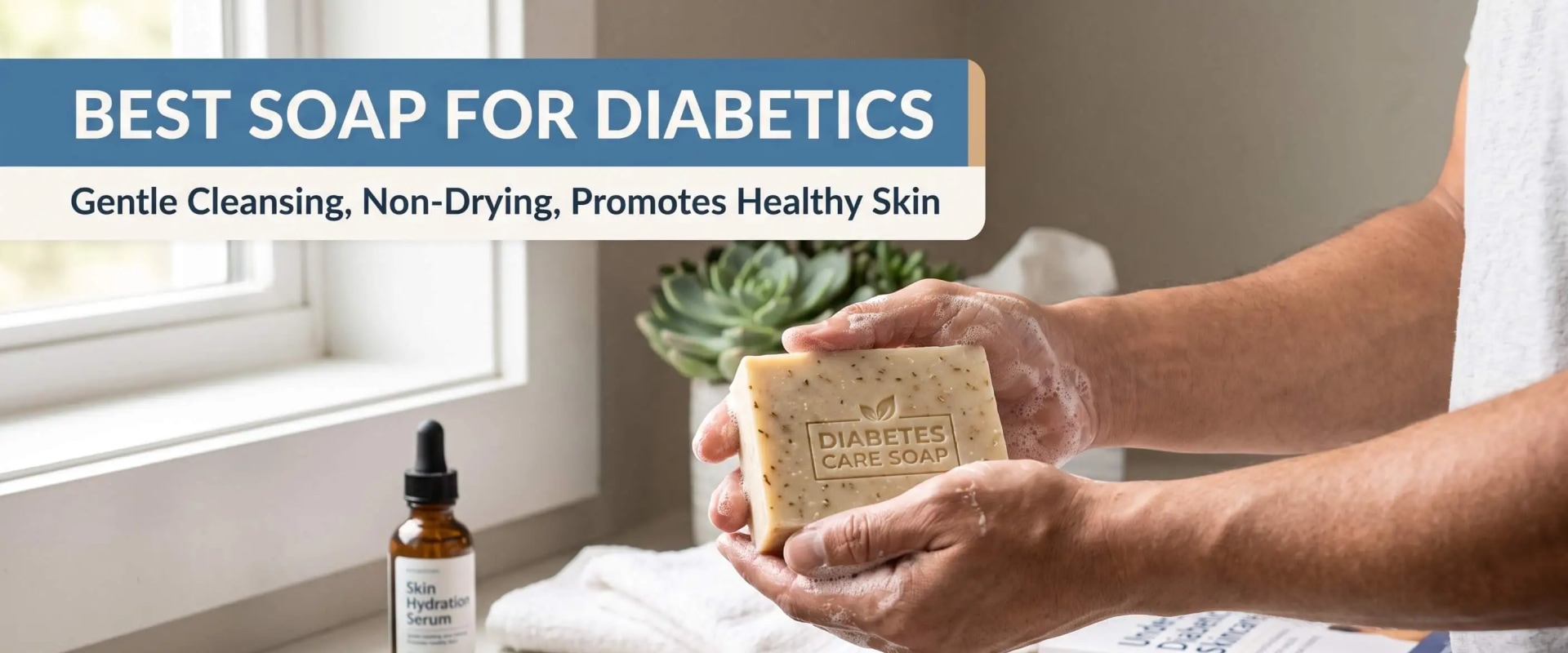
Fixing this doesn't take a specialty product line or a dermatologist's prescription pad. The good news is that finding the best soap for diabetics often comes down to knowing four or five positive qualities to check on a label. This guide covers exactly those.
TL;DR Quick Answers
Best soap for diabetics
The best soap for diabetics is fragrance-free, dye-free, and pH-balanced, with a moisturizing ingredient like glycerin or ceramides built in. Diabetic skin loses moisture faster and heals slower than average skin, so sulfates, alcohol, and antibacterial bars do more harm than good on a daily basis.
Look for: fragrance-free, dye-free, pH-balanced, glycerin or ceramides
Skip: sulfates, alcohol, added fragrance, antibacterial bars
Best format: a gentle syndet (soap-free) bar or wash
Top Takeaways
Diabetes reduces circulation and nerve sensitivity in the feet, making dry or cracked skin a bigger risk than it looks.
Skip sulfates, added fragrance, dye, alcohol, and antibacterial bars.
Choose fragrance-free, pH-balanced, moisturizing formulas instead.
Diabetes itself raises the risk of a range of skin complications beyond the feet. See: Diabetes mellitus — Skin conditions (Wikipedia)
Wash with warm, not hot, water. Dry completely between the toes. Moisturize everywhere except between the toes.
Treat soap choice as part of the daily foot check, not an extra step tacked onto it.
Nerve damage and reduced circulation drive almost every diabetic foot complication, and soap plays into both. When nerves dull, a small crack or blister can go unnoticed for days instead of hours. When a soap strips natural oils on top of that, dry skin splits more easily in the first place. That combination, not carelessness, is why foot soap deserves more attention than “whatever's on sale.”
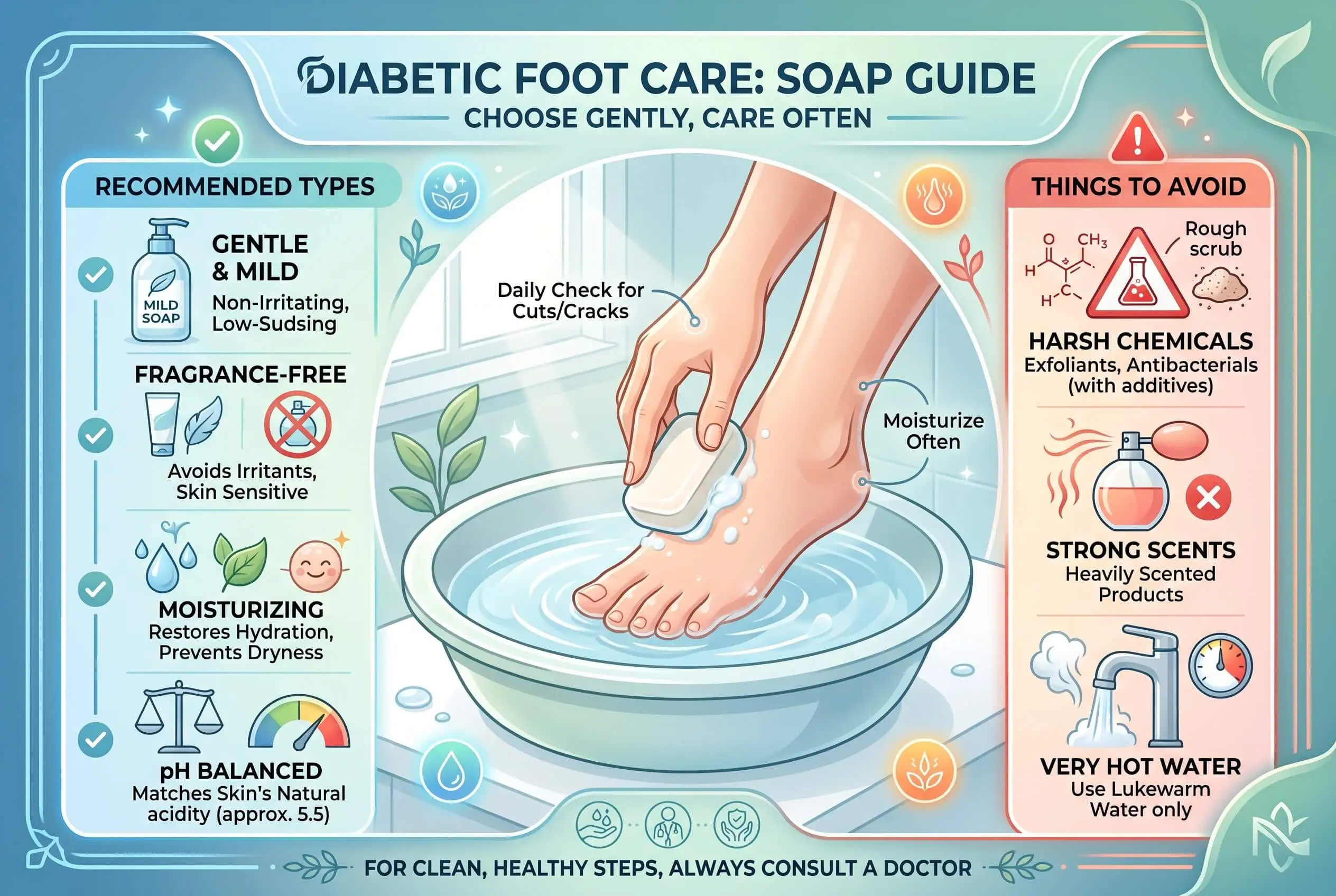
Four ingredients cause most of the damage. Sulfates, including sodium lauryl sulfate, build a rich lather while stripping the skin's oil barrier. Added fragrance and dye trigger irritation on skin that's already sensitive. Alcohol dries out skin that's already struggling to hold moisture. Antibacterial and deodorant bars are usually harsher than a foot needs on an average day.
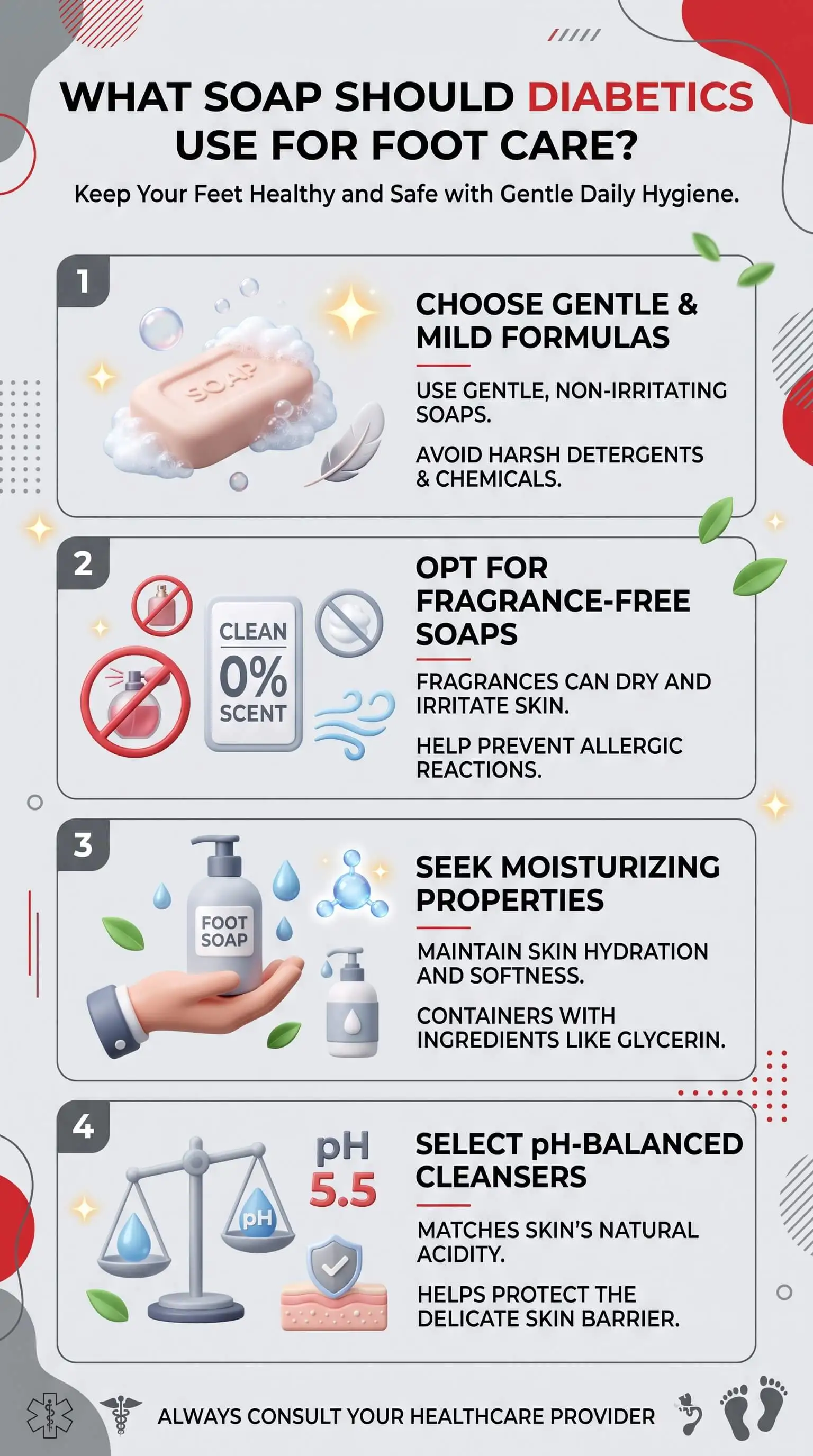
The fix is simpler than that list makes it sound. Look for fragrance-free, dye-free, pH-balanced formulas built around a moisturizing ingredient such as:
Glycerin
Ceramides
Oat extract
A gentle syndet (soap-free) bar or wash checks all of those boxes without the harsh surfactants standard bar soap relies on. If you only change one thing, drop the fragrance. That single swap does more for sensitive feet than anything else on this list.
Technique closes the gap the product alone can't. Use warm water, not hot: hot water feels good but pulls out more moisture than most people expect. Dry feet completely, especially between the toes, where trapped moisture invites fungal infection. Moisturize the tops and soles right away, and skip the space between the toes entirely.
This isn't a separate task bolted onto diabetes management. It's already part of the daily foot check most people with diabetes are told to run: look, wash, dry, moisturize, repeat. Soap is the one piece of that routine you control completely, every single day.
“The patients who run into trouble usually aren’t skipping foot care. They’re using the wrong products for it. I see this constantly: someone’s using an antibacterial bar because it feels more hygienic, and it’s actually drying out their skin and setting up the exact crack they’re trying to avoid. Switching to a fragrance-free, pH-balanced cleanser is one of the simplest changes I recommend, and it’s often the one patients notice results from fastest.”
7 Essential Resources
American Diabetes Association: Diabetes and Skin Complications. https://diabetes.org/about-diabetes/complications/skin-complications
American Academy of Dermatology: Dermatologist-Recommended Skin Care for People With Diabetes. https://www.aad.org/public/diseases/a-z/diabetes-skin-care
American Diabetes Association: Foot Care Tips. https://diabetes.org/health-wellness/diabetes-and-your-feet/foot-care-tips
American Diabetes Association: 8 Tips to Protect Your Feet With Diabetes. https://diabetes.org/health-wellness/diabetes-and-your-feet/8-tips-protect-your-feet
American Podiatric Medical Association: Diabetic Wound Care. https://www.apma.org/patients-and-the-public/conditions-affecting-the-foot-and-ankle/diabetic-wound-care/
CDC: Diabetes and Your Feet. https://www.cdc.gov/diabetes/diabetes-complications/diabetes-and-your-feet.html
WebMD: Diabetes Foot Care, Tips for Healthy Feet and Preventing Complications. https://www.webmd.com/diabetes/caring-feet
These trusted resources explain how people with diabetes can protect sensitive skin and feet, including how a gentle hypoallergenic hand soap may help reduce dryness, irritation, and skin damage.
3 Statistics
About 1 in 8 Americans has diabetes, which means foot and skin care isn’t a niche concern. It's mainstream. Source: CDC, Tips for Healthy Feet
Nearly half of people with diabetic peripheral neuropathy have no symptoms at all. That's exactly why a gentle, injury-preventing routine matters even when feet feel fine. Source: CDC, Promoting Foot Health
An estimated 30% of people with diabetes will develop a skin problem at some point during the course of the disease. Skin care isn't optional extra credit. It's part of managing the disease itself. Source: DermNet NZ, Skin Problems Associated With Diabetes Mellitus
The statistics show that diabetes-related skin and foot care deserves the same careful planning as kitchen remodeling, since prevention, safety, and the right daily routine can help reduce avoidable complications.
Final Thoughts and Opinion
Soap won't reverse what diabetes does to skin, and it's not a stand-in for daily foot checks or a podiatrist's care. But it's one of the only parts of a foot care routine you control completely, every day, and it's the piece people get wrong most often without noticing. If the bar in your shower is whatever was on sale, swapping to something fragrance-free and gentle is a small change with a real return for skin that's already working harder than it should have to.
Here's our take: fragrance-free and pH-balanced isn't a trend. It's what dermatology and podiatry guidance has pointed to for years, plainly and consistently. Start there. Adjust only if your own skin tells you otherwise.
Frequently Asked Questions
What soap should diabetics use for foot care?
Look for fragrance-free, dye-free, pH-balanced cleansers built around a moisturizing ingredient like glycerin or ceramides. A gentle syndet bar or wash beats traditional deodorant or antibacterial soap for daily use.
Why does diabetes affect skin and foot health?
Diabetes reduces circulation and nerve sensation in the feet. Skin dries out faster, heals slower, and small injuries are easier to miss entirely.
Is antibacterial soap bad for diabetic feet?
It's not off-limits, but it's harsher and more drying than most diabetic skin needs daily. A gentler formula is the better everyday default.
Should diabetics moisturize after washing their feet?
Yes, immediately after drying, on the tops and soles only. Skip between the toes. Trapped moisture there can lead to fungal infection.
When should a diabetic see a doctor about foot skin issues?
Call a doctor or podiatrist for any cut that isn't healing, redness, swelling, a color or temperature change, or any sore you didn't know was there. Don't wait for a scheduled visit.
CTA
Bookmark this before your next shower restock for an easier way to choose the best soap for diabetics. And if sensitive or eczema-prone skin is part of your world too, our hand-washing guide for eczema has more swaps worth making.