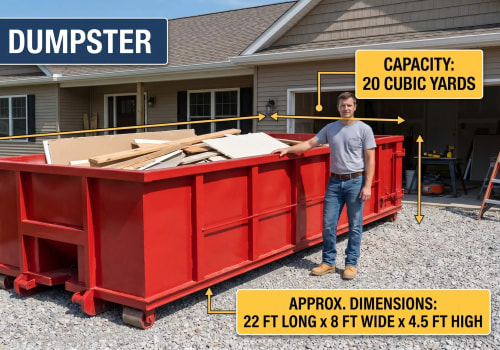
That's the exact problem appliance pick up solves. A crew comes to your home, disconnects the old unit, and hauls it away — whether you're swapping out a washer, clearing space after a kitchen remodel, or finally dealing with the second fridge that's been taking up half your garage.
Most households go through several major appliances over the years, and figuring out what to do with the old one is rarely the first thing on anyone's mind. This guide covers how appliance pick up works, what to expect, and how to choose the right option for your situation. For a quick rundown on what counts as a home appliance, the Wikipedia overview of home appliances is a solid starting point.
TL;DR Quick Answers
appliance pick up
Appliance pick up is a scheduled removal service where a licensed crew comes to your home, disconnects your old unit, and hauls it away — no truck rental, no heavy lifting on your end. It covers refrigerators, washers, dryers, dishwashers, ovens, water heaters, and ACs. Most dedicated services offer same-day or next-day availability. Free options exist through retailer haul-away programs and utility recycling rebates, but they come with restrictions. For broken units, tight timelines, or multi-appliance loads, a paid service like Jiffy Junk handles everything from disconnection to responsible disposal.
Top Takeaways
Appliance pick up is a professional removal service — a trained crew handles disconnection, heavy lifting, and disposal. You don’t move the unit.
The big ones qualify: refrigerators, washers, dryers, dishwashers, ovens, water heaters, and window ACs. Small countertop appliances usually don’t.
Free options are real, but they come with conditions. Retailer haul-away requires a purchase. Utility programs mostly cover working refrigerators and freezers. Municipal programs run on their own timeline.
Paid services trade cost for flexibility: same-day booking, broken-unit acceptance, and multi-appliance loads. Useful for post-renovation cleanouts, estate clearances, and tight turnarounds.
Refrigerant recovery is federally required. Under the Clean Air Act, any service handling refrigerators, ACs, or dehumidifiers must use EPA-certified equipment. Confirm this before you book.
Ask where it goes. Reputable services sort by condition: working units to donation partners or resale, non-working units to certified recycling.
For a breakdown of appliance categories, see the Wikipedia overview of home appliances.
What Is Appliance Pick Up?
Appliance pick up is a removal service where a trained crew comes to you, disconnects your old appliance, and takes it away — no rental trucks, no wrangling a neighbor, no wondering if it ends up in a landfill. You pick a window. They show up on time. The appliance is gone.
Some appliances are too heavy or awkward to move without proper equipment. Others are legally complicated to throw away. Refrigerators contain refrigerants regulated under the Clean Air Act. Some older units carry trace amounts of mercury or other materials that require certified handling. A reputable eco friendly appliance removal service knows the rules and follows them.
What Appliances Can Be Picked Up?
Most services cover the full range of major household units:
Refrigerators and freezers
Washing machines and dryers
Dishwashers
Ovens and ranges — gas and electric
Microwaves (built-in or over-range units)
Water heaters
Window and portable air conditioners
Dehumidifiers
Small countertop appliances — toasters, coffee makers, blenders — don't usually qualify for a dedicated pick up. Most junk removal services will throw them in with a larger load, but they won't roll a truck for a single microwave.
How the Process Works
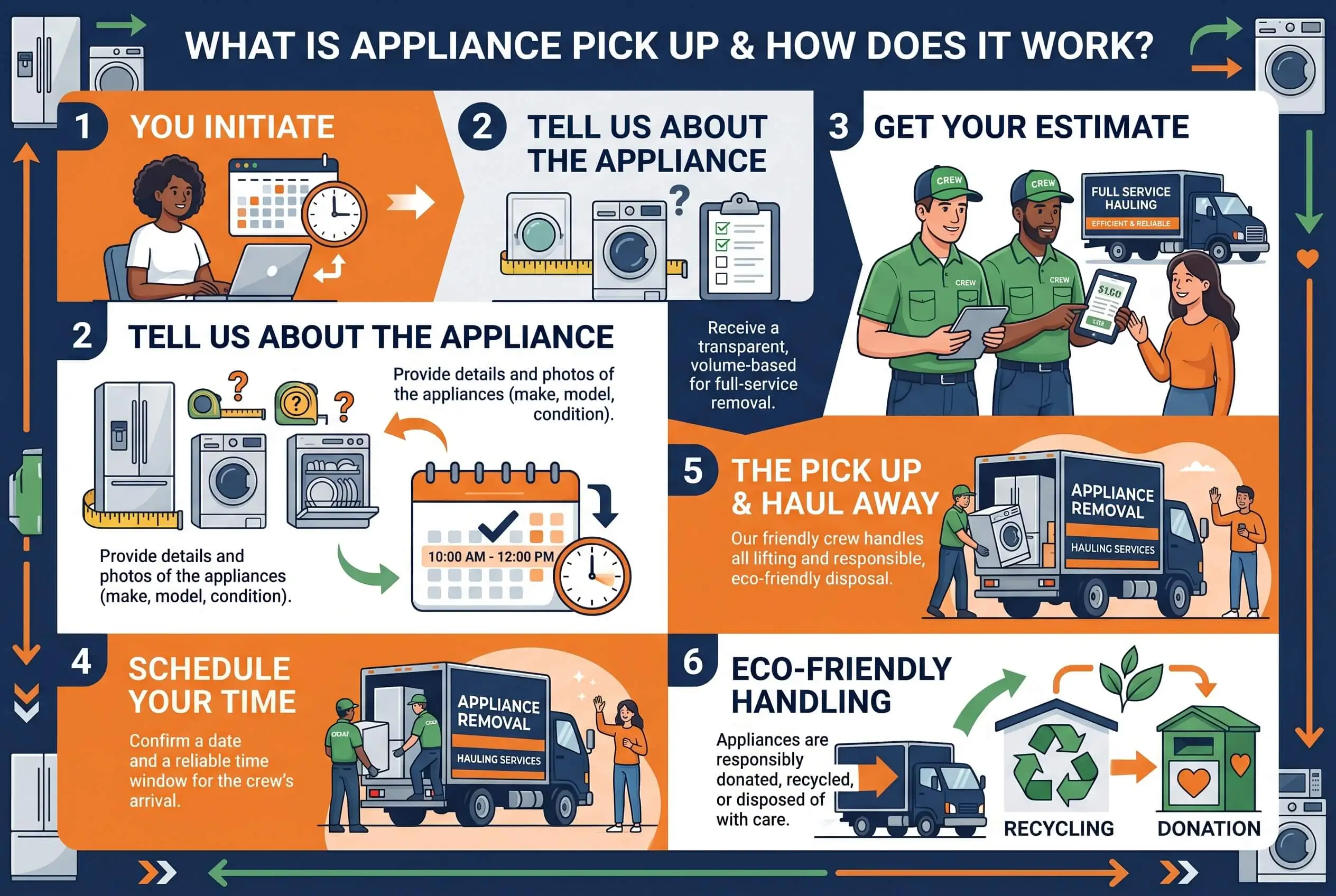
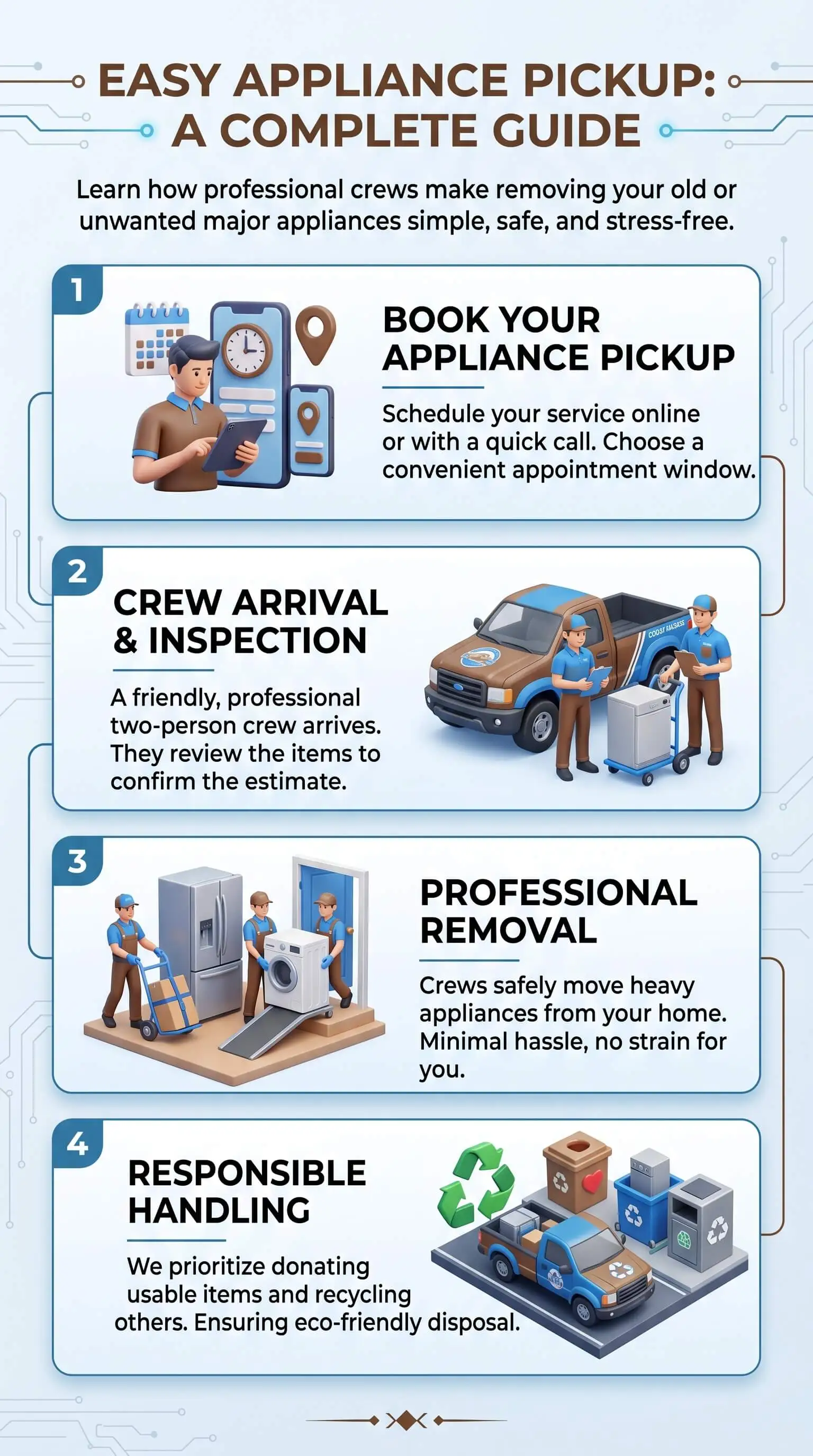
It's simpler than most people expect. Here's what happens from booking to done:
Book online or by phone. Tell them what you've got, where it is in your home, and when you need it gone. Most services ask about stairs or tight access points upfront.
Get your pick up window confirmed. Same-day and next-day availability are standard with dedicated removal services. Retailer and municipal programs usually need more lead time.
Disconnect from power. Standard electrical disconnection is on you, ideally a few hours before the crew arrives. Gas appliances are a different story — confirm whether you need a licensed tech to handle that before booking.
Clear a path. Remove anything stored on top of or around the unit. Make sure there's a clear route to the nearest exterior door. You don't need to move the appliance itself.
The crew handles the rest. They bring the dollies, the padding, and the muscle. Heavy lifting is their job, not yours.
The appliance goes to the right place. Working units often go to donation partners or resale. Non-working ones go to certified recycling. A good service tells you which path yours will take.
What Does Appliance Pick Up Cost?
The short answer: it depends on how you go about it. Here's the breakdown:
Retailer haul-away: Often free when you're buying a replacement. Home Depot and Lowe's both include haul-away on delivery, as long as the old unit is disconnected and accessible.
Utility recycling programs: Free pick up, and in a lot of cases, a cash rebate of $50 to $150 for qualifying refrigerators and freezers. Check with your electric provider or use the ENERGY STAR recycling finder to see what's available in your area.
Dedicated removal services: Flat-fee pricing, usually starting around $75 to $100 for a single appliance. Same-day and next-day options are the main advantage here.
Municipal bulk pickup: Free in many areas, but you're working on their schedule. That can mean waiting a week or more, and not every program takes every appliance type.
Free vs. Paid: The Real Trade-Off
Free pick up options exist and work well — for the right situations. Retailer haul-away requires a same-day purchase. Utility programs mostly cover working refrigerators and freezers in good shape. Municipal programs move on their timeline, not yours.
When you're clearing multiple appliances, dealing with a broken unit, working a tight post-renovation schedule, or just need it done this week, paying for a dedicated service usually makes more sense than holding out for a free option that might not cover what you've got.
7 Essential Resources
These are the tools and programs worth bookmarking before you book anything:
1. ENERGY STAR Fridge and Freezer Recycling Finder
The EPA’s ENERGY STAR program runs a searchable directory of refrigerator and freezer recycling programs by ZIP code. Many partner utilities offer free pick up plus cash rebates. If you’re not sure whether your utility has a program, this is where you check first.
2. EPA Section 608 — Refrigerant Recovery and Recycling Requirements
This is the EPA’s official page on the federal rules for refrigerant recovery during appliance disposal. If you want to know why certified technicians are required to handle your old fridge or AC — and what “certified” actually means in practice — it’s all here.
3. Jiffy Junk Appliance Pick Up Service
When retailer and utility programs don’t fit your situation, Jiffy Junk handles the full range of major appliances — disconnection, removal, and responsible disposal included. Licensed, insured, same-day and next-day availability. Book online and get a free quote.
4. Habitat for Humanity ReStore — Appliance Donation Program
If your appliance still works and you’re just upgrading, Habitat for Humanity ReStores take working refrigerators, stoves, and dishwashers in most markets. They resell them to fund housing construction. Worth a call before scheduling a removal.
5. Fairfax County — Repair, Repurpose, or Recycle: What to Do with Old Appliances
A practical guide from Fairfax County’s environmental office covering when to repair, donate, sell, or recycle. It links to the ENERGY STAR Rebate Finder, which pairs new energy-efficient purchases with proper disposal of the old unit. Useful if you haven’t decided what to do yet.
6. NAHB Study of Life Expectancy of Home Components — Appliance Lifespan Data
Before you call for a pick up, it’s worth making sure the appliance actually needs to go. This resource summarizes NAHB benchmark lifespan data across all major appliance categories and walks through the repair-vs.-replace decision so you’re not paying to remove something a $200 service call could have fixed.
7. Dropcurb — Appliance Pick Up and Disposal Cost Guide (2026)
A current pricing breakdown covering curbside removal, full-service pick up, retailer haul-away, and utility recycling programs with real 2026 numbers. Also explains the four paths an appliance takes after pick up — scrap recycling, refurbishment, parts harvesting, or landfill — so you know what questions to ask.
3 Statistics
The numbers behind appliance removal put the scale of this industry in context.
The global home appliance recycling market hit $18.8 billion in 2024 and is projected to reach $38.3 billion by 2034 — a CAGR of approximately 7.4%.
Source: Global Insight Services — Home Appliance Recycling Market (2026)
Two things are driving that growth: consumers asking harder questions about where old appliances end up, and governments tightening the rules on e-waste disposal. North America holds the largest market share. The demand for certified, transparent removal services has moved well past early-adopter territory.
Per NAHB benchmark data: refrigerators average 13 years, washers and dryers 10 to 13 years, dishwashers 9 years, gas ranges 15 years.
Most homeowners rotate through two to four major appliances over the course of owning a home. Appliance pick up isn’t a one-time problem — it comes up again. Knowing the expected lifespan of what you own helps you plan instead of scramble when something finally quits.
About 55 million home appliance units moved through recycling channels globally in 2024. That number is projected to reach 85 million by 2028.
Source: Global Insight Services — Home Appliance Recycling Market (2026)
Refrigerators account for roughly 45% of that volume, with washing machines at 30%. The refrigerator share comes partly from federal refrigerant recovery requirements — improper disposal isn’t just bad practice, it’s illegal. That regulatory weight is a big part of why professional appliance pick up has grown into its own industry.
Final Thoughts and Opinion
Appliance pick up is usually the last thing on anyone’s mind until the delivery truck shows up and someone asks what to do with the old unit. At that point, you’re making decisions under pressure.
Here’s the honest take: match the option to the situation. Buying a replacement from a major retailer and the old unit is accessible? Free haul-away is hard to beat. Got a working refrigerator or freezer? Call your utility before you pay anyone — there’s a real chance they’ll pay you to take it. If neither of those fits — broken unit, no replacement purchase, or you just need it gone this week — book a dedicated removal service and be done with it.
One thing matters regardless of which route you take: certification. Refrigerant recovery is required by federal law, not optional. Any service handling a refrigerator, air conditioner, or dehumidifier should be able to confirm they’re using EPA-certified equipment. If they can’t answer that question directly, look elsewhere.
The practical reality is that scheduling appliance removal has gotten much easier. Online booking, flat-fee pricing, and same-day availability mean most homeowners don’t have to wait for a municipal pickup window or coordinate around a retailer’s delivery schedule. For most situations, that convenience is worth what it costs.
Frequently Asked Questions
How do I schedule an appliance pick up?
Most services take five minutes to book — online or by phone. You’ll need the appliance type, its location in your home, and a preferred window. Mention stairs or tight doorways upfront. Confirm whether the quoted price covers disconnection and whether there are add-on charges for access challenges or multiple units.
Will the crew disconnect my appliance?
For standard electrical connections, yes — disconnection is typically included. Gas is different. A lot of services require a licensed plumber or utility tech to handle gas line disconnection before the crew arrives. Ask about this when you book so there’s no delay on the day.
Is appliance pick up free?
Sometimes. Retailer haul-away is usually free when you’re buying a replacement — Home Depot and Lowe’s both offer it on delivery. Many electric utilities offer free pick up plus a rebate for qualifying fridges and freezers; check the ENERGY STAR recycling finder for what’s available in your ZIP code. For broken units, non-qualifying appliances, or when free options don’t fit your schedule, dedicated removal services start around $75 to $100 for a single unit.
What happens to my old appliance after pick up?
That depends on the condition. Working units often go to donation partners — Habitat for Humanity ReStores, appliance resale shops — or get refurbished. Non-working units go to certified recycling facilities. A single refrigerator yields 100 to 150 pounds of recoverable steel, plus aluminum and copper. Refrigerators and ACs also require certified refrigerant recovery before any dismantling begins. Ask your provider upfront if you want documentation of eco-friendly disposal.
Is same-day appliance pick up available?
Yes, with most dedicated removal services. Book early in the day and you’ve got the best shot at a same-day window. Retailer and municipal programs don’t work that way — they need advance notice, sometimes a week or more. If speed matters, a professional service is the right call.
Do I need to be home for the pick up?
For in-home pick up, yes — someone needs to be there to provide access. Some providers offer a no-contact option for curbside or exterior placements where you leave the unit out and they handle everything else. Check what’s available in your area when you schedule.
Ready to Schedule Your Appliance Pick Up?
No truck rental. No asking a neighbor for a favor. No figuring out where the thing actually goes when it leaves your house. Jiffy Junk handles all of it — disconnection, removal, and responsible disposal included.
Licensed and insured. Same-day and next-day availability. Covers the full range of major household appliances.