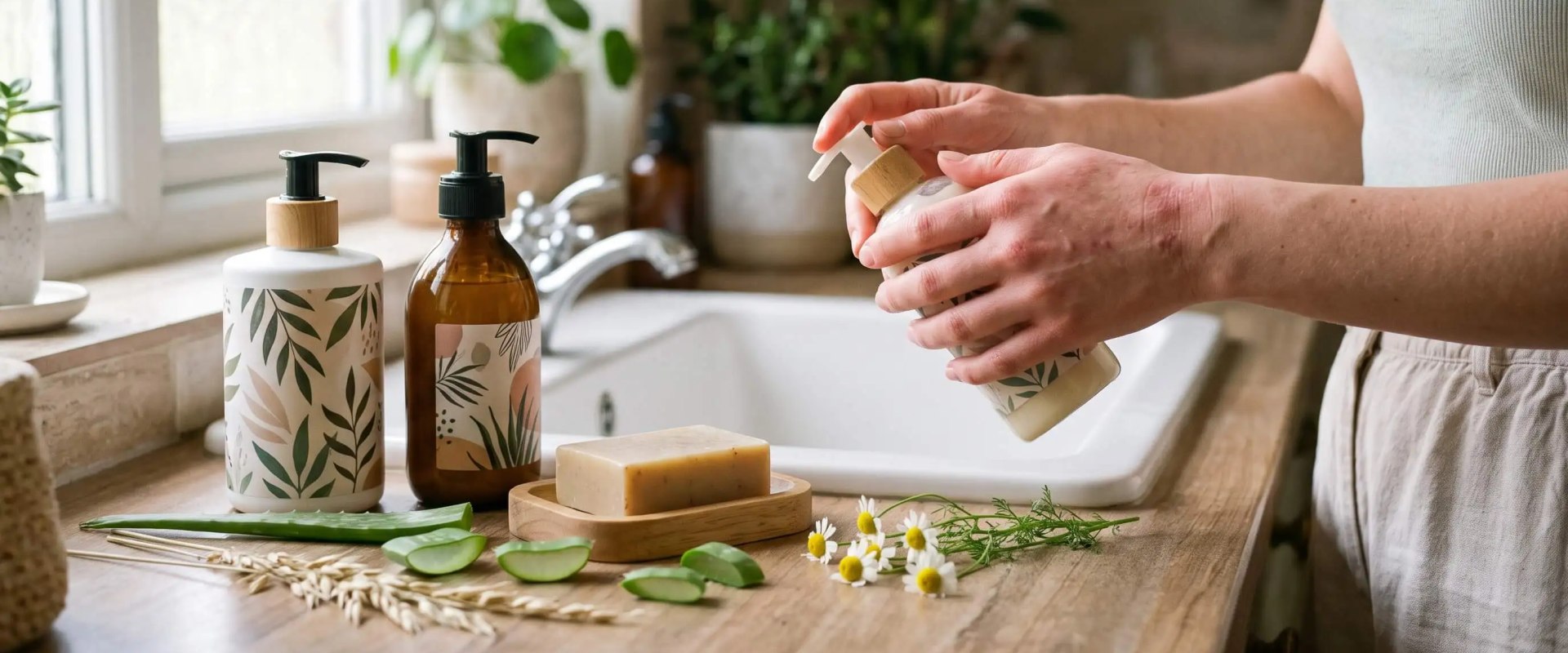
She hadn't. Lavender oil and tea tree oil are essential oils that eczema specialists tell patients to avoid, and coco-glucoside belongs to a surfactant family the American Contact Dermatitis Society once named Allergen of the Year.
So are plant-based hand cleaners better for eczema? Some of them are. "Plant-based" tells you where the ingredients grew, and it tells you almost nothing about how they'll treat a skin barrier that's already struggling.
I remodel kitchens for a living, so I've read a lot of soap labels while standing at other people's sinks.
TL;DR Quick Answers
Hand Soap for Eczema
The best hand soap for eczema is fragrance-free, sulfate-free, dye-free, and free of essential oils, even when the label says "plant-based" or "natural." If you clean your hands many times a day, a rinse-free formula also cuts down the wet-dry cycles that wear away an already weak skin barrier.
Fragrance-free, not unscented. Unscented products can contain masking fragrances.
No essential oils. Lavender, tea tree, and citrus oils, plus limonene and linalool, are common eczema triggers.
No SLS or alkaline bars. Sulfates strip skin oils, and castile or traditional bar soaps are alkaline.
Check the surfactant. If coconut-based cleansers have bothered you, look for cocamidopropyl betaine and anything ending in "glucoside."
Fewer wet-dry cycles. A rinse-free cleanser between full washes spares hands that get wet all day.
Seal and patch test. Look for the NEA Seal of Acceptance, and test new soap on your inner forearm for several days.
Top Takeaways
"Plant-based" describes where ingredients come from. Nobody regulates the term, and it doesn't tell you whether a soap is gentle on eczema-prone skin.
Many plant-based formulas skip sulfates and dyes, which genuinely helps.
Essential oils, botanical fragrance, and some coconut- and sugar-derived surfactants are documented triggers for sensitive skin.
A fragrance-free label matters more than a plant-based one, and "unscented" doesn't mean the same thing.
Alkaline bars and castile soaps can be hard on a damaged skin barrier.
Patch test any new hand soap for eczema, and see a dermatologist if three weeks of changes don't help.
What "Plant-Based" Actually Means on a Hand Soap Label
Plant-based hand soap is a cleanser whose surfactants and conditioning ingredients come mostly from plants such as coconut, corn sugar, olive oil, or aloe. No regulator sets a minimum percentage for the term, and nobody checks the claim before it goes on the bottle.
Two things are worth keeping in mind at the store:
Plant-derived ingredients are still processed. A coconut-based surfactant starts as coconut oil and goes through industrial chemistry before it ever foams.
A natural ingredient can still be harsh. Poison ivy grows wild, and tea tree oil comes straight from a plant, yet neither one is gentle on sensitive skin.
Why Eczema-Prone Hands React to Cleansers
Eczema-prone skin has a weaker barrier, so whatever is in your soap reaches the living layers underneath more easily. Each wash strips away some of the oils that hold that barrier together. Healthy skin rebuilds that layer quickly, while eczema-prone skin falls a little further behind with every wash.
Cleanser reactions usually fall into two types, and both belong to the larger family of skin inflammation called dermatitis:
Irritant contact dermatitis happens when an ingredient damages the skin directly. Harsh surfactants, high pH, hot water, and constant wet work can all cause it, and anyone can get it with enough exposure.
Allergic contact dermatitis happens when your immune system learns to react to one specific ingredient. Once you're sensitized, even a trace of it can set off a flare.
According to the American Academy of Dermatology, even plain water can irritate hands that stay wet throughout the day. That's why soap choice matters most for people who wash constantly, like parents, nurses, line cooks, and anyone who rinses their hands at the kitchen sink ten times before dinner. I cover water temperature, drying, and moisturizing in my hand washing routine for eczema.
What Plant-Based Hand Cleaners Get Right
Plant-based formulas deserve some credit, because many of them skip the ingredients that cause the most trouble at the sink.
Many leave out sodium lauryl sulfate, or SLS, a detergent known for stripping skin oils.
Most skip dyes, which add color to the bottle and nothing to the cleaning.
Glycerin and plant oils can leave hands feeling less tight after a wash.
Biodegradable formulas are easier on what goes down the drain, the same reason campers pack eco-friendly soap for a weekend trip.
Those advantages count. They still don't make soap safe for eczema on their own.
Plant-Derived Ingredients That Can Still Trigger a Flare
Some of the most common plant-based soap ingredients are well-documented irritants or allergens. These are the ones I look for first on the back of a bottle.
Essential Oils and Botanical Fragrance
Essential oils are the biggest trap in "natural" hand soap. Lavender, tea tree, citrus, eucalyptus, and peppermint oils are concentrated plant extracts. Dr. Vivian Shi, who has directed an eczema and skin barrier clinic in Tucson, advises her atopic dermatitis patients to avoid them because they can trigger a contact allergy that flares eczema. Watch for fragrance compounds like limonene, linalool, and geraniol on the ingredient list as well, since fragrance from a plant is still fragrance.
Coconut- and Sugar-Derived Surfactants
Some of the gentlest-sounding cleansers in plant-based soap have a track record of their own. Manufacturers first promoted cocamidopropyl betaine, which comes from coconut oil, as low-irritancy and hypoallergenic. Allergy reports kept piling up until the American Contact Dermatitis Society named it Allergen of the Year in 2004. In 2017, the society gave the same title to alkyl glucosides, a group that includes decyl, lauryl, and coco glucoside made from plant sugars and fatty alcohols.
Most people use these ingredients without any trouble at all. Skin that's already sensitized is another story.
Traditional Bar and Castile Soaps
Soapmakers produce true soap, castile included, by saponifying plant oils, and that process leaves it alkaline. The Allergy & Asthma Network tells people with hand eczema to avoid alkaline or harsh soaps. A pure olive oil bar can be simple and lovely and still be the wrong pick for a cracked knuckle.
Soothing Botanicals That Don't Soothe Everyone
Chamomile, calendula, and arnica turn up in a lot of "calming" formulas. All of them belong to the daisy family, and people who are allergic to one member of that family can react to its relatives. If a calming botanical has ever made your hands worse, bring that up with a dermatologist.
Plant-Based vs. Conventional Hand Soap for Eczema
Conventional liquid soap usually relies on SLS or SLES plus a synthetic fragrance, and every use means a full wash, rinse, and dry. For eczema-prone hands, sulfates, fragrance, and dyes are the usual culprits.
Typical plant-based soap swaps in coconut- and sugar-derived surfactants or saponified oils, and it's often scented with essential oils. You still wash, rinse, and dry, and the trouble spots shift to essential oils, botanical allergens, and alkaline bars.
A fragrance-free, rinse-free plant-based cleanser uses sulfate-free, plant-derived cleansers with no fragrance or alcohol. Since nothing gets rinsed, your hands skip the wet-dry cycle entirely, which leaves an allergy to a single ingredient as the main thing to watch.
Whether an ingredient came from a plant or a lab matters less than what's actually in the bottle and how often it puts water on your skin.
How to Evaluate a Plant-Based Hand Soap for Eczema: A 6-Point Label Check
I run this check with clients at their own sinks. It takes about a minute per bottle and works for any hand soap for eczema, plant-based or not.
Look for "fragrance-free" instead of "unscented." Unscented products can contain masking fragrances.
Scan the whole list for essential oils. Plant names followed by "oil," such as lavandula, melaleuca, or citrus, give them away, and so do limonene and linalool.
Know your surfactant. If coconut-based cleansers have bothered you before, check the back label for cocamidopropyl betaine and anything ending in "glucoside."
Skip dyes and colorants, since they're there for looks and do nothing for cleaning.
Save alkaline bars for days when your skin isn't cracked. Castile and traditional bar soaps make a poor everyday choice for hands in a flare.
Patch test before the bottle goes by the sink. Dab a little on your inner forearm every day for several days and watch for redness or itching.
The National Eczema Association's Seal of Acceptance is a handy shortcut on top of these checks, and the same label habits help with choosing soap for sensitive skin in other corners of the house.
Where Rinse-Free Formulas Fit for Frequent Hand Cleaners
For anyone who cleans their hands many times a day, water matters as much as ingredients. Every wash, rinse, and dry pulls moisture out of the skin barrier, and the AAD lists frequently wet hands among the common causes of hand eczema.
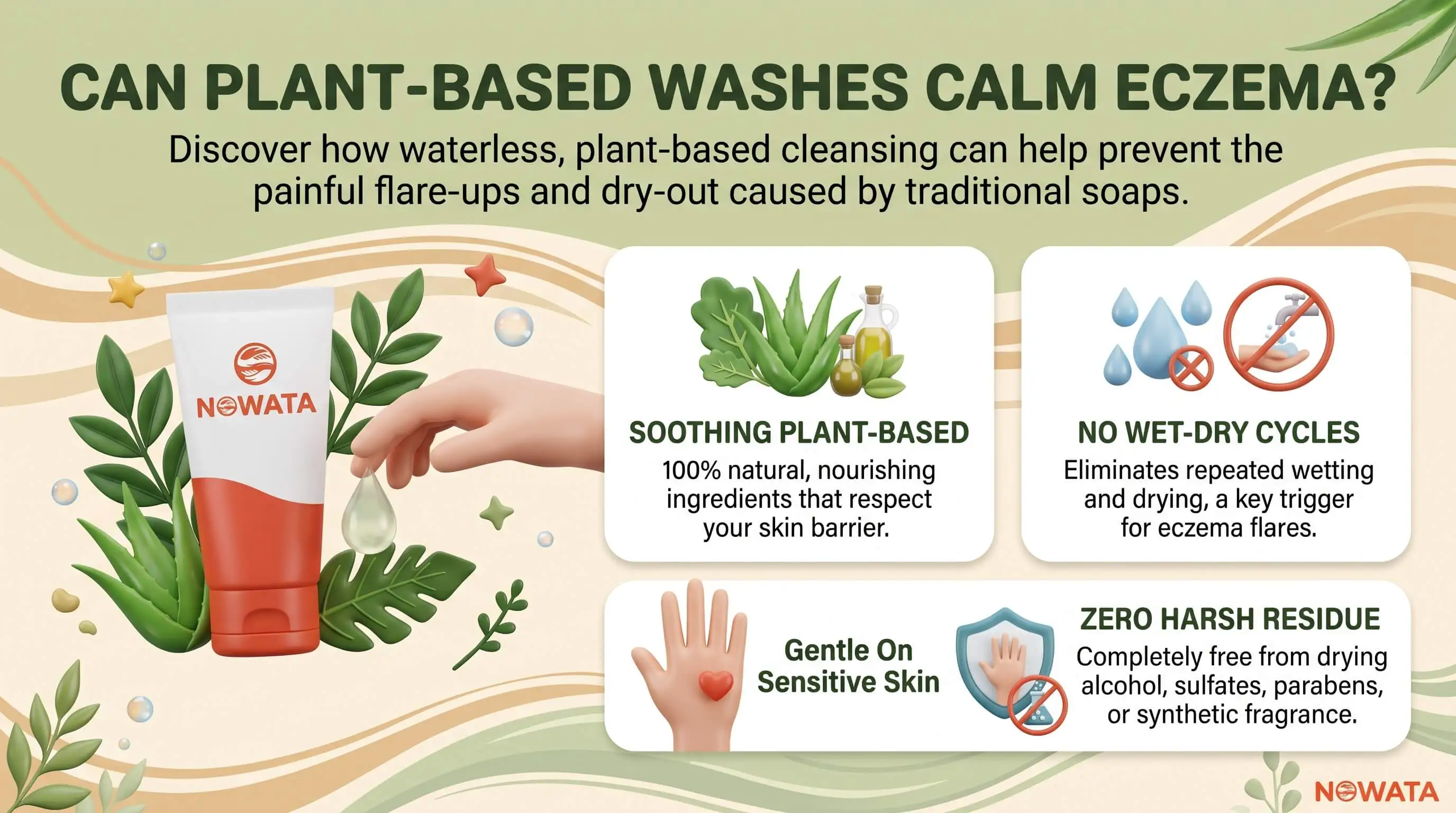
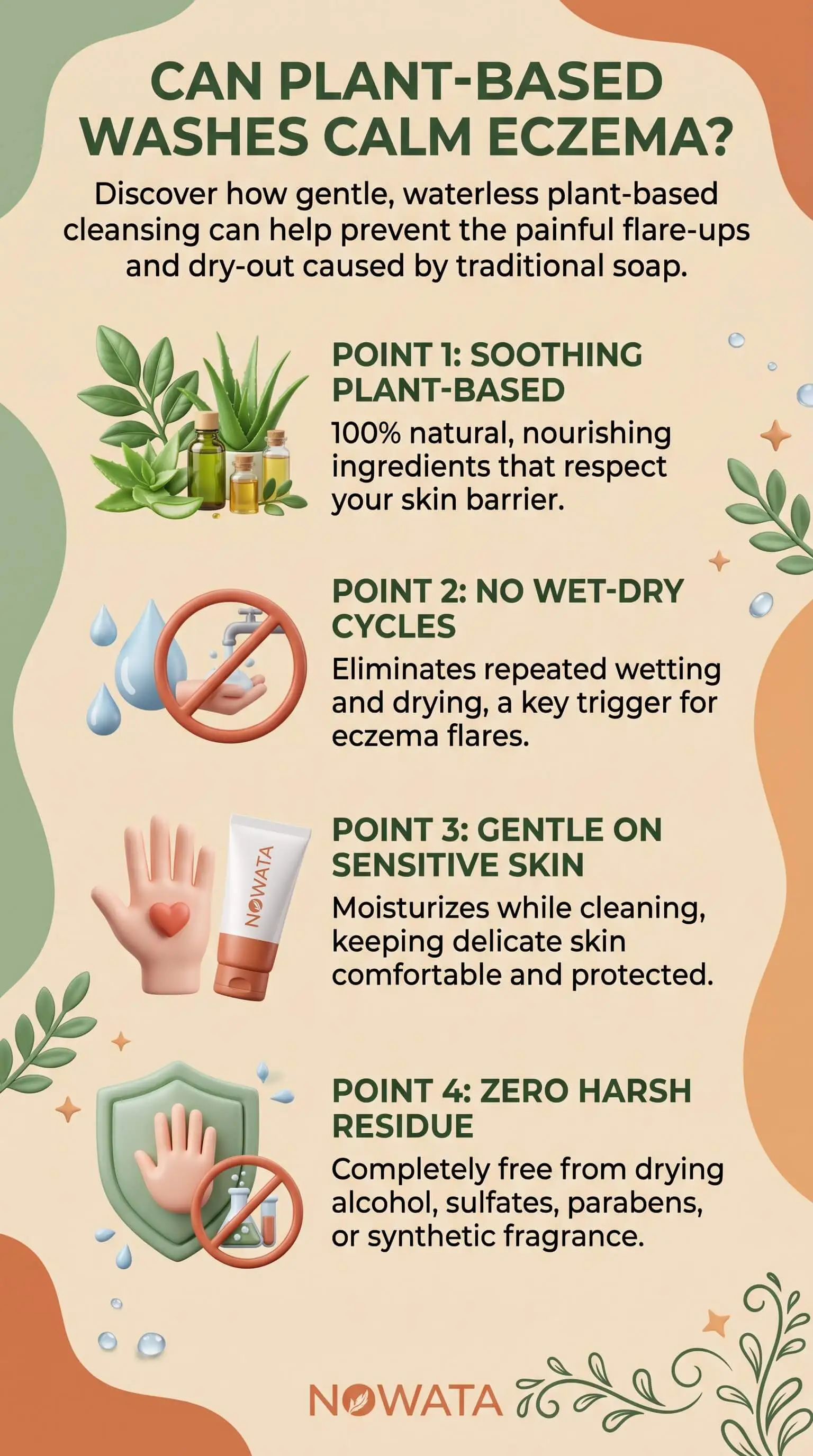
That's why I've started pointing some clients toward rinse-free options. NOWATA is one I'm comfortable mentioning because it passes every point on the label check. It's plant-based and fragrance-free, it contains no alcohol, and it's made without sulfates, parabens, phosphates, or dyes. You rub it onto dry hands until it forms small clumps and then brush the clumps away, so your hands get clean without a sink, a rinse, or another wet-dry cycle.
NOWATA is doctor-made. Dr. Ruslan Maidans, a dentist, and Dr. Yalda Shahriari, who holds a PhD in biomedical engineering, developed it for their own children's sensitive skin because they wanted clean hands and calm skin to coexist in their house. Their guide to gentle hand soap for eczema explains how the formula works and what it leaves out. NOWATA is for hand cleansing only and isn't a treatment for eczema, so patch test it the way you would any new product.
Setting Up an Eczema-Friendly Kitchen Sink
Most of the hand washing in a home happens in the kitchen, so that's where the right products make the biggest difference. This is the setup I recommend once a remodel wraps up:
A fragrance-free pump bottle that has passed the label check, even if it doesn't match the backsplash.
A thick, fragrance-free moisturizer within arm's reach of the faucet.
A faucet with easy temperature control, so lukewarm water is the default.
Gloves with cotton liners for dishes and cleaning.
A rinse-free cleanser for quick cleanups between cooking steps, when another full wash would be your fifth in an hour.
"I've finished plenty of kitchens where the client picked the soap dispenser before the countertop. It's usually a pretty bottle with lavender sprigs on the label. A few weeks later, that same client holds up a pair of cracked knuckles and asks whether the new hard water is to blame. It usually isn't. When we read the back of that bottle together, we find an essential oil blend, a coconut-based surfactant, or both. I never tell anyone to give up on plant-based products, but I do tell them to quit trusting the front of the bottle. Swap in something that's truly fragrance-free and park a moisturizer right next to the faucet. Then cut out whatever wet-dry cycles you can. Most of my clients see their hands settle down within a few weeks. If you don't, book a dermatologist, and you'll walk into that appointment knowing exactly what you've already ruled out."
7 Essential Resources
When clients want more than a label check, these are the pages I send them to. None of them is selling anything, and each one is run by medical professionals or patient organizations.
National Eczema Association: Hand Eczema. The clearest patient guide I know to what hand eczema looks like and what tends to set it off. Start here if you're still working out what's happening to your hands.
National Eczema Association: Seal of Acceptance Product Directory. Independent physicians review every product in this directory against NEA's list of excluded ingredients. It's the quickest way I've found to shrink a crowded soap aisle.
American Academy of Dermatology: Hand Eczema. Board-certified dermatologists wrote this one. It explains why tracking down the cause matters and how frequently wet hands can trigger a flare on their own.
Allergy & Asthma Network: Eczema and Washing Hands Frequently. Practical advice on picking a soap, a sanitizer, and a moisturizer, including the reminder to steer clear of alkaline and harsh soaps.
American Contact Dermatitis Society: CAMP. Once patch testing pins down a specific allergen, this database helps you find personal care products without it. The same site lists providers who do patch testing.
DermNet: Composites Allergy. A dermatologist-written overview of allergy to the daisy family, chamomile and arnica included, and how doctors diagnose it.
The Dermatologist: Integrative Medicine and Atopic Dermatitis Q&A with Vivian Shi, MD. An eczema clinic director explains how essential oils differ from pressed plant oils and why she tells patients to avoid them.
3 Statistics
About 14.5% of people develop hand eczema at some point in their lives. That works out to roughly one adult in seven, which is reason enough to take a second look at the bottle by your sink. Source: Hand hygiene and hand eczema systematic review, Contact Dermatitis via PMC.
In 2021, 7.3% of U.S. adults had diagnosed eczema. Women reported it more often than men, at 8.9% compared with 5.7%. Source: CDC National Center for Health Statistics, Data Brief No. 460.
In a small patch-test study of 30 adults with atopic dermatitis, nine reacted to plants in the daisy family. Chamomile and arnica were the most common triggers. Thirty people is a small sample, but it's a useful warning that botanical ingredients aren't automatically safe for eczema-prone skin. Source: Contact allergy to Compositae plants in patients with atopic dermatitis, PubMed.
Final Thoughts and Opinion
After years of reading soap labels at other people's sinks, I treat "plant-based" as a decent first filter and "fragrance-free" as the one that decides.
The best plant-based cleansers drop sulfates, dyes, and synthetic fragrance, and eczema-prone hands notice the difference. The worst ones trade synthetic fragrance for a blend of essential oils, toss in a few botanical extracts, and print "gentle" in bigger type. Both kinds can sit side by side on the same shelf at the same price, wearing the same leafy label.
My advice is to trust the ingredient list over the marketing and to count how many times a day your hands get wet. Any change deserves about three weeks before you judge it. If your hands are still cracking or bleeding after that, see a dermatologist, because patch testing can name the exact ingredient behind the trouble, and no label can do that for you.
None of this replaces medical care for a severe flare. For everyday hand eczema, though, the bottle by the kitchen sink does more quiet work than most people give it credit for.
Frequently Asked Questions
Is plant-based hand soap better for eczema than regular soap?
Not automatically. Plant-based soaps often leave out sulfates and dyes, which helps, but many of them add essential oils or botanical extracts that can trigger a flare. A fragrance-free conventional soap can actually be gentler than a heavily scented plant-based one, so judge the ingredient list instead of the front label.
What is the best hand soap for eczema-prone hands?
The best hand soap for eczema is the one your own skin tolerates, and that usually means fragrance-free, dye-free, sulfate-free, and free of essential oils. The National Eczema Association's Seal of Acceptance is a good place to start. Patch test before you switch, because triggers vary from person to person.
Can essential oils in natural hand soap make eczema worse?
Yes. Essential oils are concentrated plant extracts, and many of them are known skin allergens. Dr. Vivian Shi, who has directed an eczema and skin barrier clinic, tells her atopic dermatitis patients to avoid them, even in small amounts. Check labels for lavender, tea tree, citrus, and peppermint oils, along with fragrance compounds like limonene and linalool.
Is castile soap good for eczema on hands?
Usually not for daily use on irritated hands. Castile soap is true soap made from plant oils, and that makes it alkaline. The Allergy & Asthma Network advises people with hand eczema to avoid alkaline and harsh soaps, so a gentle, fragrance-free cleanser is the safer everyday pick.
What's the difference between fragrance-free and unscented hand soap?
Fragrance-free means the maker didn't add any fragrance ingredients. Unscented means the product shouldn't smell like much, and manufacturers sometimes get there by adding a masking fragrance. For eczema-prone skin, choose fragrance-free and confirm it on the full ingredient list.
Are coconut-derived ingredients safe for eczema-prone skin?
For most people they are, though not for everyone. Cocamidopropyl betaine and the glucoside surfactants come from coconut or plant sugars, and the American Contact Dermatitis Society has named both an Allergen of the Year. If coconut-based cleansers have bothered you before, ask a dermatologist about patch testing.
How do I patch test a new hand soap if I have eczema?
Apply a small amount to a clear patch of skin on your inner forearm once or twice a day for several days, and rinse it off the way you would at the sink. Stop if you notice redness, itching, or bumps. If nothing happens, try it on your hands for a week before it becomes your everyday soap.
Read the Label Before You Restock the Sink
The next time you refill the soap by your kitchen sink, run the bottle through the 6-point label check first. If it fails, trade it for something that's truly fragrance-free and give your hands three weeks to show you how they feel about the switch.
I'd love to hear how it goes. Leave a comment below with what's sitting by your sink, what you switched to, and whether it helped. I read every one, and your setups often shape what I write next.


