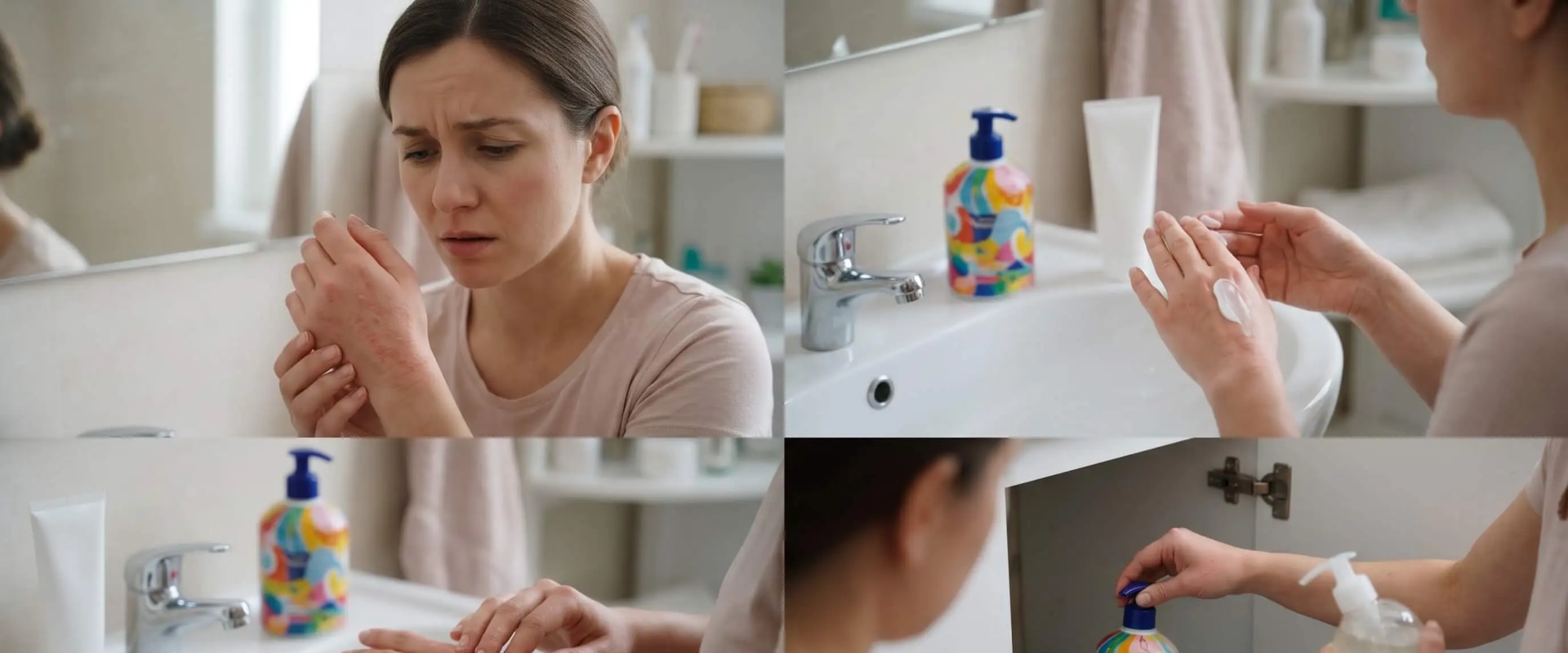
If your hands feel tight every time you dry them since you switched soaps, you're probably not imagining it. A soap that works fine for your neighbor can be a dry soap for you, and the switch is usually when you find out. The fix tends to be cheap and quick.
I remodel kitchens for a living, so I spend a lot of time at sinks with people who wash their hands fifteen or twenty times a day. Here's what I've seen dry hands out after a soap change, what I'd do this week, and when to call a dermatologist instead of buying another bottle.
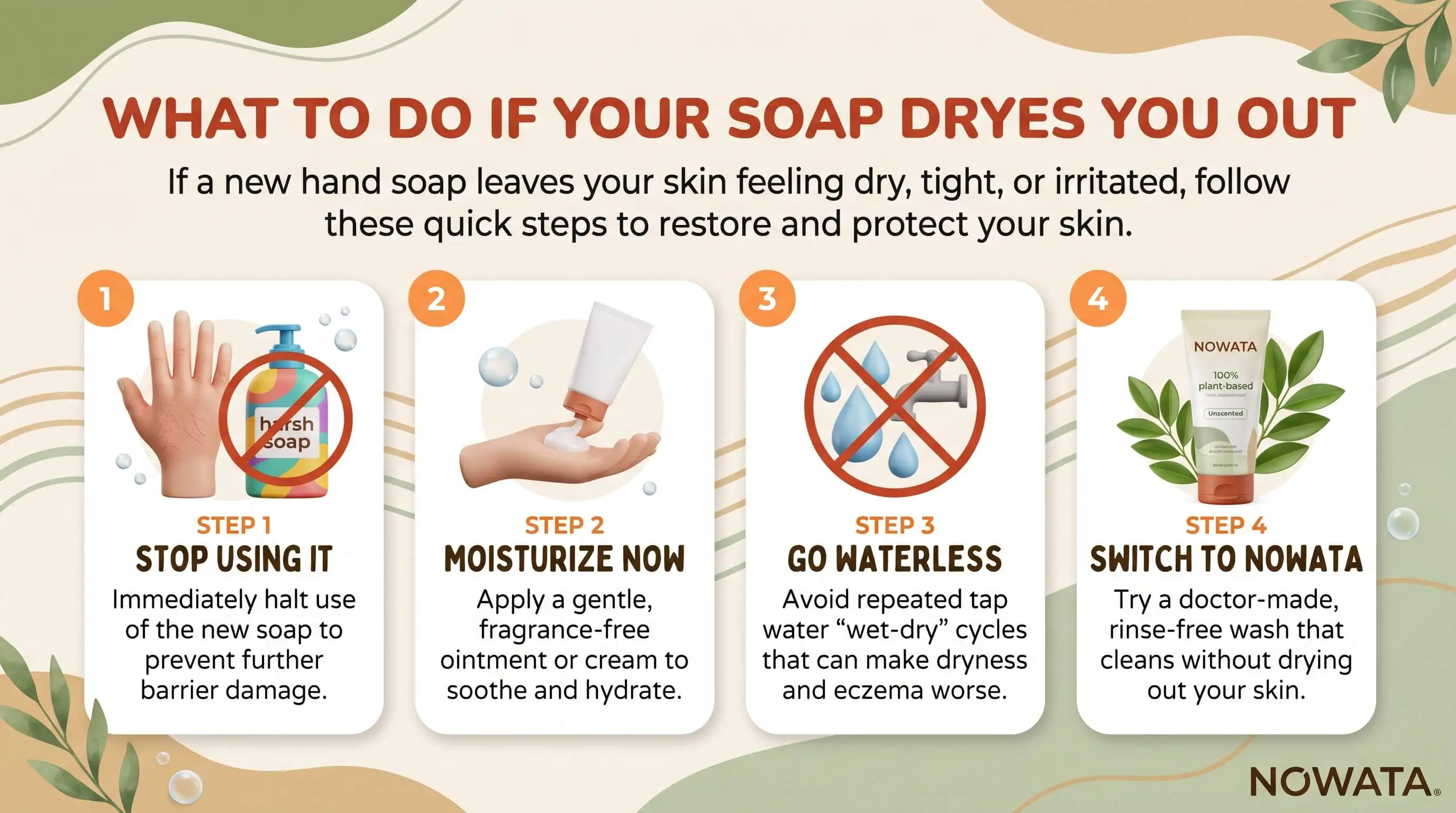
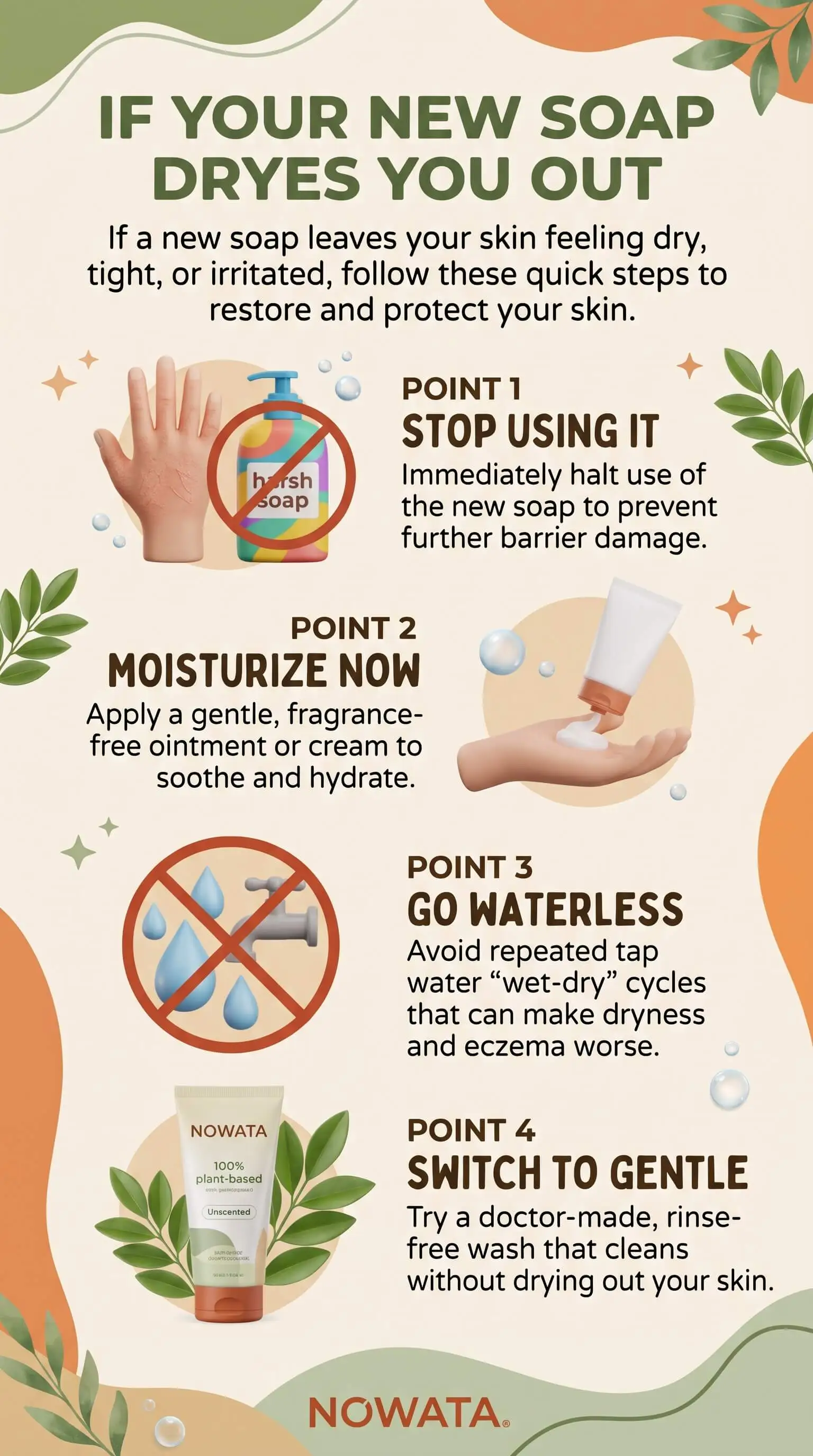
Here's the short version. Stop using the new soap for five to seven days. Go back to your old one, or use a fragrance-free, pH-balanced cleanser. Wash in lukewarm water, pat dry, and put on a thick fragrance-free moisturizer within three minutes. If your skin settles down, the soap is the problem. If it cracks, spreads, or itches, see a dermatologist.
TL;DR Quick Answers
Dry Soap
Dry soap has two meanings. It can be a soap that leaves your skin dry and tight, or a waterless, rinse-free soap you use on dry hands with no sink.
Soap that dries skin: Most bathing soaps test at pH 9 to 10, well above skin's naturally acidic surface, so harsh surfactants and added fragrance strip away natural oils.
Rinse-free dry soap: Rub a dime-sized drop on dry hands until it forms small clumps, then brush the dirt away with them. You won't need water or a towel.
Why it helps dry hands: It cuts down on hot-water washes, and an alcohol-free formula like NOWATA won't sting cracked knuckles the way sanitizer can.
What to look for: Plant-based, alcohol-free, and made without fragrance.
When to use water anyway: Greasy pans and raw meat still call for soap and running water.
Top Takeaways
A higher pH, stronger surfactants, or added fragrance in a new soap is usually what's drying your hands.
Put the new soap away for five to seven days. If your skin calms down, you've found the cause.
Lukewarm water, a gentle pat-dry, and a fragrance-free cream within three minutes of washing do most of the repair.
On your next label, look for "fragrance-free" rather than "unscented," plus pH-balanced or syndet with glycerin high on the list.
A rinse-free dry soap can take some small cleanups off the sink, but greasy or raw-meat hands still need soap and water.
Bleeding cracks, blisters, or a spreading rash belong with a dermatologist.
Why a New Soap Can Dry Out Your Skin
A new soap dries your skin when it strips off more of your natural oil than your skin can rebuild before the next wash. The usual culprits are a higher pH, harsher cleansing agents, and added fragrance or antibacterial ingredients. Your old soap was probably easier on you in at least one of those ways.
Soap pH vs. Skin pH
Healthy skin is slightly acidic. Traditional soap comes from reacting fats or oils with an alkali, so the finished bar ends up alkaline. Every wash nudges your skin's acid layer out of balance, and that layer is part of what holds water in. It bounces back, just slowly. Wash again before it does and the tight feeling builds up through the day.
Surfactant Strength and Your Skin Barrier
Surfactants are the ingredients that grab oil so water can carry it away. Some are gentle. Others are made for bacon grease and burnt-on cheese, and bulk refills for busy kitchens often lean that way. Many "beauty bars" and mild liquid cleansers use gentler synthetic surfactants called syndets, which can be made closer to your skin's own pH.
Fragrance, Dyes, and Antibacterial Additives
Most people change the scent without thinking twice. Fragrance is one of the best-known causes of skin irritation and allergy, and some dyes and preservatives cause trouble too. Antibacterial soaps add one more active ingredient for your hands to deal with, and plain soap does the job just as well for everyday home use.
The Kitchen Factor: Hard Water, Hot Water, and Wash Frequency
This is the part I know best. The kitchen sink gets more hand washes than any other spot in the house. Think raw chicken, a toddler's sticky lunch, the dog's bowl, then the counters. On a big cooking day, one person can easily wash fifteen or twenty times. Plenty of faucets also run scalding at the first quarter-turn, and hard water leaves a mineral film behind. So your hands may already be under strain, and the new soap just pushes them over the line.
How to Tell if the Soap Is Really the Problem
Soap dryness usually shows up within a few days to two weeks of the switch. Look for it on the backs of your hands, across your knuckles, and between your fingers. Before you blame the bottle, ask yourself a few honest questions.
Did the dryness start after the switch, or was it already there?
Did anything else change around the same time, like the heat coming on, a new dish detergent, new gloves, or a different hand cream?
Is it only where the soap touches?
Does it ease up on days you wash less, like a weekend away?
Then grab both bottles and read the labels side by side.
pH: "pH-balanced" or "syndet" is the gentler sign. True soap or "saponified oils" with no pH claim tends to be harsher.
Cleansing agents: A cream or gel base with mild surfactants is easier on skin than a heavy foamer that brags about cutting grease.
Fragrance: Look for "fragrance-free." Words like "parfum," "fragrance," or a named scent mean it's in there.
Antibacterial agents: None is better for daily kitchen use. Benzalkonium chloride is a common one to spot.
Added moisturizers: Glycerin, plant oils, or ceramides near the top of the list help.
If the new bottle lands on the harsh side for most of these, you've likely found your answer.
What to Do Right Now: A 7-Step Plan to Restore Moisture
Most dryness from a soap switch settles in one to two weeks once the trigger is gone and your skin has time to rebuild.
Put the new soap away for five to seven days. Go back to your old soap or a fragrance-free, pH-balanced cleanser.
Turn the water down to lukewarm. Hot water pulls oil off fast, and warm water cleans nearly as well.
Use one pump and wash for 20 seconds. Scrubbing longer won't get your hands any cleaner.
Pat your hands dry with a soft towel. Rubbing irritates skin that's already raw, and a little leftover moisture helps the next step.
Moisturize within three minutes. Use a thick, fragrance-free cream with ceramides, glycerin, or petrolatum while your skin is still a bit damp.
Wear gloves for dishes and cleaning. Cotton liners under rubber or nitrile gloves keep sweat and detergent off your skin.
Try the new soap once more to confirm. If the tightness comes back within a day or two, toss it.
What to Look for in Your Next Soap
Pick the replacement the way you'd pick a faucet finish, carefully and for how you actually use the sink. Choose "fragrance-free" over "unscented," since unscented products can still hide a masking fragrance. I'd go with a pH-balanced or syndet formula, skip antibacterial soap at home, and look for glycerin or plant oils near the top of the ingredients. I walked through a similar label check in my post on choosing a gentler soap for diabetic foot care, and most of it carries straight over to the kitchen sink.
Is a Dry Soap the Answer? What Rinse-Free Formulas Change
"Dry soap" has a second meaning, a waterless soap you use on dry hands with no sink at all. If your hands are already irritated, that can save you a few hot-water washes a day, and those add up.
I keep a tube of NOWATA by the back door for in-between messes, like garden soil on my hands or a quick clean before lunch on a job site with no running water. It's a plant-based dry soap made with coconut milk powder, kaolin clay, and tapioca starch. It's alcohol-free and made without fragrance, so it doesn't sting cracked knuckles the way sanitizer does. You rub a dime-sized drop on dry hands until little clumps form, then brush the dirt off with them. Try it over the trash can or outside, because the crumbs have to land somewhere.
Soap and running water are still the right call after raw meat or greasy pans. A rinse-free option just covers the small jobs so the sink isn't doing everything. If you camp or travel, I covered the outdoor side in how much eco-friendly soap you really need for a weekend trip.
When Dryness Is More Than Dryness
Tight, dry skin is annoying, but a reaction calls for a doctor's visit. Call a dermatologist or your doctor if you notice any of these:
Cracks that bleed or won't close after a week of gentle care
Blisters, oozing, or swelling
A red rash spreading past where the soap touched
Itching that wakes you up
Warmth, yellow crusting, or red streaks, which can mean infection
These can be signs of irritant or allergic contact dermatitis. Treating it may take a prescription, and finding the exact trigger may take patch testing. If you already live with eczema, my hand-washing tips for eczema-prone hands go further into daily routines.
"The soap pump is the cheapest thing in a new kitchen, and it's the last thing anyone suspects. I once had a client ask me to rip out a faucet we'd installed two months earlier because her hands had been cracking since move-in day. The faucet was fine. Her builder had stocked the sink with a heavily scented antibacterial refill, and the water heater was set to 140. We swapped the soap for a fragrance-free one, turned the heater down to 120, and left a tube of hand cream on the windowsill. Two weeks later her knuckles had healed and the faucet stayed put. Ever since, when someone's skin changes right after they move in or switch products, I check the bottle before I touch the plumbing."
7 Essential Resources
When clients want more than a remodeler should be telling them about skin, these are the pages I send.
American Academy of Dermatology: Dermatologists' Top Tips for Relieving Dry Skin. Board-certified dermatologists explain why you should pat dry, use hand cream after every wash, and buy fragrance-free.
Mayo Clinic: Dry Skin, Symptoms and Causes. Covers what dry skin looks like, why harsh soap and hot water make it worse, and when to book an appointment.
Mayo Clinic Health System: What to Do About Dry Skin. An everyday guide that names soaps and detergents as common causes and lists easy fixes at home.
National Eczema Association: Contact Dermatitis. Helpful if you're not sure whether you're dealing with plain dryness or a reaction.
DermNet: Cleansers. A dermatology reference on how true soaps and syndets differ, and why alkaline soap can leave skin dry.
U.S. FDA: Allergens in Cosmetics. Lists common cosmetic allergens and explains how several can hide behind the one word "fragrance" on a label.
CDC: Handwashing. Clear guidance on when and how to wash, so going easier on your skin doesn't mean cutting corners on hygiene.
3 Statistics
Most bathing soaps tested landed between pH 9 and 10, far above healthy skin's 5.4 to 5.9. The researchers used a pH meter on brands bought from local shops and tied that gap to dryness and irritation. Source: Tarun et al., 2014, Indian Journal of Dermatology.
Skin's natural surface pH averages about 4.7, and even plain tap water can keep it raised for up to six hours. In a study of 330 people, skin below pH 5 held moisture better and had a stronger barrier. Source: Lambers et al., 2006, International Journal of Cosmetic Science.
In the general population, about 2.6% of people react to one standard fragrance mix on patch testing, and 1.9% react to a second. Those figures come from patch testing 3,119 people across five European countries, and rates climb much higher among people already referred for skin testing. Source: The Hospitalist review of fragrance allergy.
Final Thoughts and Opinion
I think most people give up on the wrong thing. They blame the winter air or buy a pricier hand cream, and the bottle of scented soap sits right there by the faucet the whole time.
Run it like a job site. Change one thing, wait a week, and see what happens. If you swap the soap, drop the water temperature, and start a new cream all on the same day, you'll feel better without ever learning which one did it. Then you'll buy the same harsh soap again next spring.
I'd also like to see more homes keep a gentle rinse-free option near the back door or in the car. Not every mess needs hot water. My hands noticed the difference within a month.
One caveat I won't budge on: if you see bleeding cracks, blisters, or a rash that keeps spreading, stop experimenting and get a dermatologist to look at it.
Frequently Asked Questions
Why does my new soap make my skin dry when my old one didn't?
Your new soap probably has a higher pH, stronger surfactants, or added fragrance, any of which can strip more oil than your old formula did. Read both ingredient lists side by side. Look for fragrance, antibacterial agents, and whether glycerin or plant oils have gone missing.
How long does it take skin to adjust to a new soap?
Skin doesn't toughen up to a soap that's too harsh for it. If you're still dry after a week or two, the soap isn't a good fit. Once you stop using it, mild dryness usually clears in one to two weeks.
Is bar soap more drying than liquid soap?
Not necessarily. Traditional bars tend to be alkaline, but plenty of liquid soaps pack strong detergents and heavy fragrance too. The label tells you more than the format does. A fragrance-free, pH-balanced bar can be gentler than a scented liquid.
What is a dry soap, and can it help dry skin?
A dry soap is a waterless, rinse-free cleanser you rub on dry hands, no sink needed. It can help by cutting down on hot-water washes during the day. Pick one that's alcohol-free and made without fragrance, and keep using soap and water when your hands are greasy or after handling raw meat.
Can soap cause dry patches or a rash?
Yes. Soap can cause irritant contact dermatitis, which looks like red, dry, chapped patches. Some people are allergic to a fragrance or preservative in the formula, which is allergic contact dermatitis. If a rash spreads, blisters, or itches badly, have a dermatologist check it.
Should I use antibacterial soap at the kitchen sink?
For most homes, no. Plain soap and water do the job for everyday kitchen tasks, and antibacterial formulas add one more active ingredient that can bother dry skin. A gentle soap and a good 20-second wash cover nearly everything.
What moisturizer works best after washing?
Use a thick cream or ointment over a thin lotion, and make sure it's fragrance-free. Ceramides, glycerin, and petrolatum are good ingredients to look for. Put it on within three minutes of patting dry, and keep the tube right beside the sink so you don't skip it.
When should I see a doctor about soap-related dryness?
Book a dermatologist if you have cracks that bleed, blisters, oozing, swelling, or signs of infection like warmth and yellow crusting. Go in too if a week or two of gentle care and a different soap haven't helped.
Give Your Skin a Week and Watch What Changes
Pick one thing to change today. Put the new soap under the sink, turn the water a notch cooler, or set a fragrance-free hand cream right next to the faucet where you'll see it. Your hands will let you know within a few days.
Then tell me how it went in the comments. Which soap did you switch to, what did your hands feel like, and what finally helped? Did you try waterless hand soap on sensitive skin, and did you notice a difference? I read every comment, and your kitchen-sink stories shape what I write next.


